

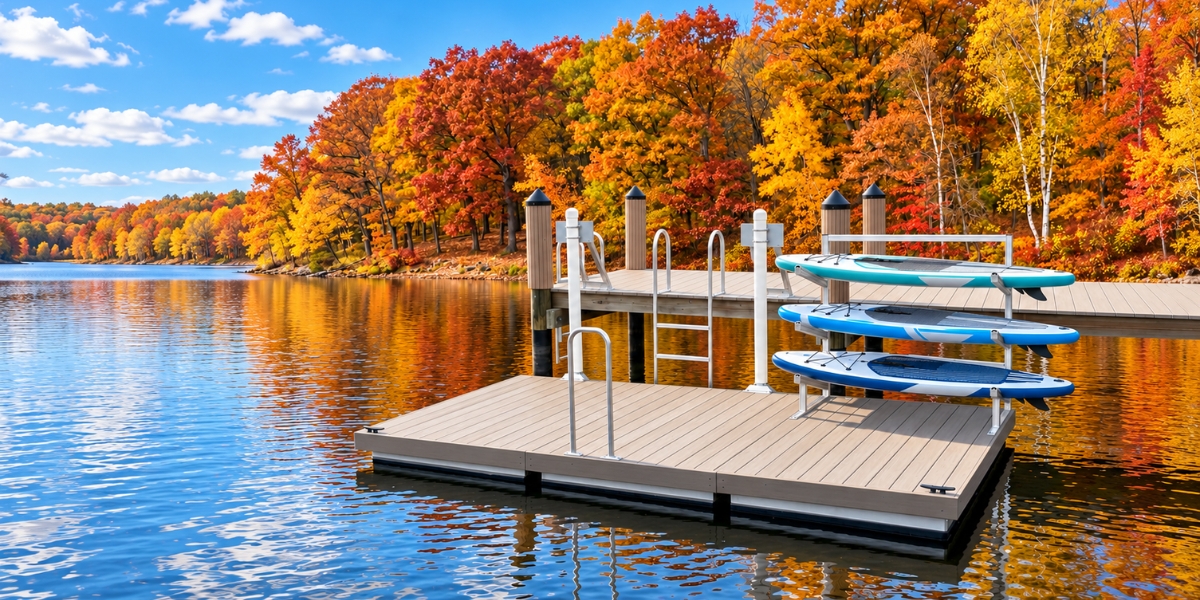
Fall Floating Dock Checklist: Getting Your Waterfront Ready for Holiday Guests
Fall brings a different rhythm to the waterfront. Summer boating, swimming, and long afternoons outside may slow down, but many docks are still active as families prepare for Thanksgiving, holiday weekends, and visits from friends. That makes fall dock maintenance an important part of getting your property ready for the season.
A floating dock that feels familiar to you may be completely new to a holiday guest. Visitors might not know where the walking surface changes, how a gangway moves, where steps are located, or which areas become slippery when leaves and moisture collect. Cooler weather and earlier sunsets also change how people use the waterfront.
A seasonal inspection gives you time to clean the dock, review its condition, remove clutter, check access points, and plan for colder weather before company arrives. Following a practical dock safety checklist can also help you look at the waterfront from a guest’s point of view instead of focusing only on routine maintenance.
Whether your dock is used for relaxing, launching a kayak, boarding boats, or gathering with family, the goal is simple: prepare the space for the way it will actually be used during fall.
Why Fall Dock Maintenance Matters Before the Holidays
Docks face different conditions in fall than they do during summer. Leaves and other debris collect on walking surfaces. Daylight hours shorten. Rain can leave surfaces damp longer. In colder regions, water temperatures can fall quickly even when the afternoon air still feels comfortable.
Holiday gatherings add another consideration. A dock that usually sees two or three regular users may suddenly have children, older relatives, first-time visitors, or guests carrying food and drinks. That is why fall dock maintenance should include more than cleaning.
The weeks before the holidays are a good time to review:
- Decking and walking surfaces
- Dock connections and attachment points
- Gangways, ramps, and shore transitions
- Railings and handholds where installed
- Ladders and other accessories
- Lighting around access areas
- Furniture and gathering spaces
- Flotation devices and waterfront safety equipment
- Winter storage and seasonal preparation
Owners looking for year-round upkeep guidance can also review AccuDock’s dock maintenance tips for information that applies beyond the fall season.
Begin Fall Dock Maintenance With a Full Inspection
Before decorating or moving furniture onto the dock, inspect the system during daylight. Start at the shoreline and slowly walk the entire usable area. Look at the decking, connections, attachments, accessories, and places where one surface meets another. The goal is to notice anything that has changed since the height of summer.
Pay attention to signs such as:
- Loose or missing hardware
- Uneven or damaged walking surfaces
- Changes in the alignment of dock sections
- Loose accessories or fittings
- Worn areas around connections
- Unusual movement
- Sharp or protruding components
- Debris caught around the dock
- Damage near ramps or gangways
A visual inspection does not mean every dock owner should attempt structural repairs. Floating dock designs, hardware, anchoring systems, and site conditions vary. When damage involves structural components or attachment systems, follow the manufacturer’s instructions or contact a qualified dock professional.
Owners who want more background on how floating systems may connect to shore or nearby structures can review AccuDock’s information about floating dock attachment methods.
Compare the Dock With Its Normal Condition
You know how your dock normally feels better than anyone. Think about whether it moves differently than it did earlier in the year. Look for new noises, gaps, shifting sections, or changes around connections. Seasonal water-level changes may affect the dock’s position, particularly at gangways and shoreline transitions. Photos from earlier in the season can be helpful. A quick comparison may make subtle changes easier to spot.
Clean the Dock Before Holiday Guests Arrive
A clean dock looks better for guests, but appearance is only part of the reason to remove fall debris. Leaves, dirt, mud, plant material, and other buildup can cover decking, hardware, seams, and transitions. Cleaning the surface makes it easier to inspect the dock and identify areas that deserve attention.
Start by removing loose debris. Focus on corners, ramps, steps, connection points, and areas around dock furniture. For washing, follow the cleaning recommendations for your specific decking material. Products and methods that work for one surface may not be suitable for another.
AccuDock owners can review the company’s decking options for more information about available surfaces. The AccuDock resource on PVC decking boards also provides more detail about that particular material.
After cleaning, allow the dock to dry and inspect the walking surface again.
Look for:
- Raised edges
- Loose components
- Areas where water tends to collect
- Worn or damaged sections
- Dirt or organic material trapped in gaps
- Changes in traction between different surfaces
Cleaning early also gives you enough time to deal with a problem before a holiday gathering instead of discovering it when guests are already arriving.
Create a Dock Safety Checklist for Holiday Guests
Your normal dock routine is based on familiarity. Holiday guests do not have that advantage. A useful dock safety checklist should follow the same route your visitors will take, from the yard, parking area, or house to the shoreline and onto the floating dock. Walk that route as if you had never been there before.
Ask yourself:
- Are steps and surface changes easy to see?
- Is the walking path free of stored gear?
- Are hoses, cords, ropes, and tools out of the way?
- Can people reach the dock without squeezing around furniture?
- Are handholds or railings secure where they are installed?
- Can guests see the edges of the dock after sunset?
- Are flotation devices accessible?
- Is there enough room for people to move comfortably?
- Are children likely to enter the waterfront area without an adult noticing?
AccuDock’s guide to dock safety equipment provides another resource for reviewing items commonly used around dock areas.
Think About Guests Who Are New to the Waterfront
Someone who spends every weekend on a dock naturally adjusts to movement, changing water levels, and transitions between surfaces. A first-time visitor may not. Tell guests about unusual steps, moving gangways, slippery areas, or other conditions before they reach the dock. Children should be closely supervised around the waterfront.
Older visitors may also benefit from a clear path and nearby seating rather than having to cross a crowded dock. A good dock safety checklist is not only about equipment. It is also about making the layout easy to understand.
Check Gangways, Ramps, and Shore Access
The route between land and a floating dock deserves extra attention during fall dock maintenance. Changing water levels can affect the angle of a gangway. Rain can create muddy areas near shore. Wet leaves may gather where different surfaces meet. Seasonal conditions may also make a familiar transition less comfortable for guests.
Inspect:
- Gangway walking surfaces
- Connections at both ends
- Railings or handholds
- Shoreline landing areas
- Steps
- Transitions between materials
- Areas where water or leaves collect
Clear away anything that reduces walking space. During a gathering, avoid placing coolers, chairs, decorations, food tables, or storage containers near the main entrance to the dock.
If you are planning a new access system or replacing an older one, AccuDock’s aluminum gangways and ramps show options designed for floating dock access.
Check Dock Lighting Before the Days Get Shorter
One of the easiest fall changes to overlook is how early darkness arrives.
A dock that is easy to use at 8 p.m. in July may already be dark by dinner during the holiday season. Test your lighting after sunset rather than relying only on how the space looks during the day.
Look closely at:
- Shore access
- Steps
- Gangways
- Dock edges
- Seating areas
- Boat boarding locations
- Paths between the house and waterfront
Lighting should help people understand where they are walking without creating glare that makes the surrounding area harder to see.
Holiday decorations can add atmosphere, but electrical safety should come first. The U.S. Consumer Product Safety Commission recommends inspecting lights and extension cords for damage, using products rated for their intended location, and connecting outdoor lights to GFCI-protected receptacles. Review CPSC holiday lighting safety guidance
For decorating ideas suited to waterfront settings, AccuDock also offers a guide to holiday dock lighting ideas.
Arrange Furniture Without Crowding the Dock
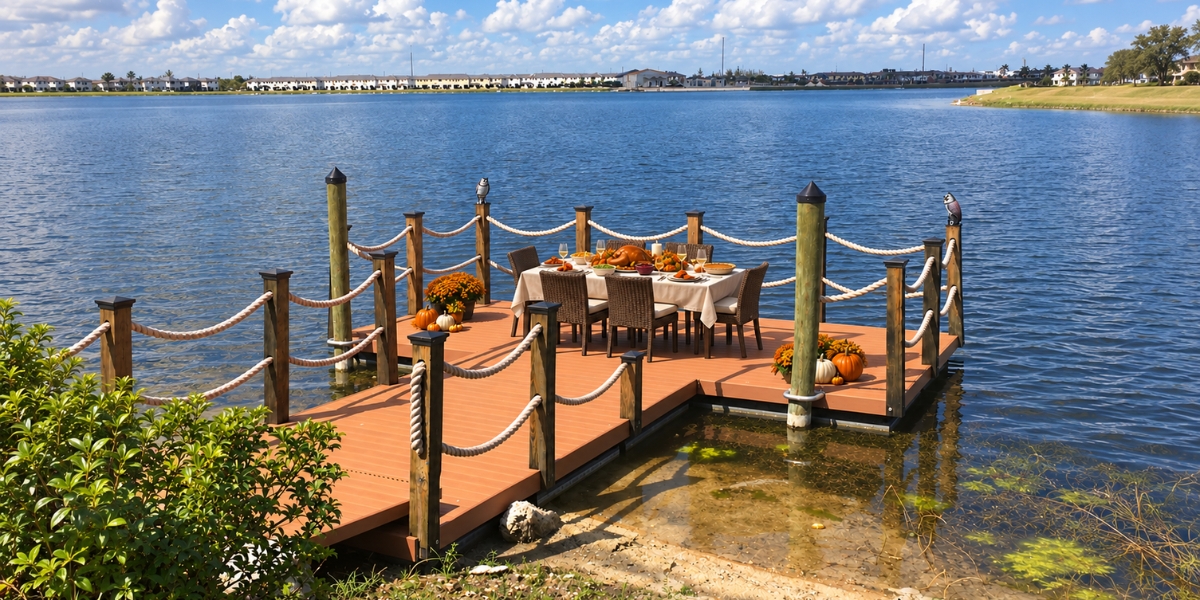
Holiday gatherings often mean adding extra seating. That can work well on a dock with enough usable space, but furniture should fit around normal traffic patterns rather than forcing people toward the edges.
Start with the walking path. Guests should be able to enter, move around, sit down, and return to shore without weaving through chairs or stepping around tables.
Place furniture away from:
- Gangways
- Ladders
- Steps
- Dock connections
- Boat boarding areas
- Frequently used edges
- Emergency equipment
Stable outdoor furniture is usually a better fit than lightweight pieces that may move in wind. Cushions and decorative items should also be secured or brought inside when weather conditions change.
For homeowners who want a floating space designed for relaxing and entertaining, AccuDock’s leisure dock systems provide examples of dock configurations intended for recreational waterfront use.
Add Cold-Water Awareness to Your Dock Safety Checklist
Fall can create a misleading combination of comfortable air and cold water. According to the National Weather Service, unexpectedly entering cold water can trigger cold shock, including gasping and rapid breathing. Loss of muscle control can follow as exposure continues. The agency recommends paying attention to water temperature, checking conditions, and wearing appropriate flotation around cold water. See National Weather Service cold-water safety guidance
That makes cold-water awareness an important part of a seasonal dock safety checklist, even if nobody plans to swim. A person can enter the water unexpectedly after a slip or missed step. Guests may also underestimate the water temperature because the air still feels mild.
Before a gathering:
- Keep flotation devices where they can be reached
- Supervise children near the waterfront
- Discourage running and rough play on the dock
- Tell guests about slippery or unfamiliar areas
- Check the weather before the event
- Pay attention to local water conditions
- Keep waterfront access well lit after dark
Cold-water preparation becomes more important as fall moves toward winter.
Prepare for Leaves, Rain, Wind, and Changing Weather
A fall dock can change between the morning and afternoon.
Wind may cover a recently cleaned surface with leaves. Rain can make steps or transition areas wet. Decorations and lightweight furniture can shift during stronger gusts.
Check the weather again on the day of your gathering.
Remove wet leaves from walking areas, especially around steps, gangways, and shore access. Store or secure decorations when windy conditions are expected.
Outdoor dining and seating plans should also include an indoor backup. Trying to keep guests outside when conditions have changed can create problems that have nothing to do with how well the dock was prepared.
For waterfront properties exposed to more serious seasonal weather, AccuDock’s extreme weather preparation guide can help owners think through broader dock preparation.
Review Dock Hardware and Accessories
Fall is also a useful time to look at items attached to or stored on the dock. Check ladders, cleats, bumpers, storage equipment, paddlesport racks, railings, and other accessories you use regularly. Look for looseness, visible damage, missing components, or items that are no longer being used.
Avoid leaving unnecessary gear on the dock simply because it stayed there all summer. Removing seasonal equipment creates more room for guests and reduces clutter during colder months. It can also make later winter preparation easier.
If you are not sure which components belong to your current setup, AccuDock’s dock equipment guide provides an overview of common dock accessories and related equipment.
Combine Fall Dock Maintenance With Winter Planning
For many dock owners, holiday preparation happens close to the beginning of winter conditions. That makes fall dock maintenance a practical time to start thinking about what will happen after the guests leave. Begin with removable items.
Depending on your climate and dock setup, seasonal items may include:
- Portable furniture
- Cushions
- Umbrellas
- Decorative lighting
- Paddlecraft
- Storage containers
- Water toys
- Removable accessories
- Holiday decorations
Store items according to their manufacturer recommendations and local conditions. The dock itself requires a more site-specific decision. Winter planning can depend on climate, water movement, ice, anchoring, dock design, and manufacturer guidance. Some systems remain in the water under certain conditions, while other locations call for removal or additional preparation.
AccuDock’s guide to winterizing a floating dock offers more information on seasonal planning. Owners can also review AccuDock’s dedicated dock winter preparation resource.
A Practical Fall Dock Maintenance Timeline
You do not need to complete every task on the same weekend. Spreading the work across several weeks makes preparation easier.
| Timing | Fall dock maintenance task | What to check |
|---|---|---|
| 3 to 4 weeks before guests arrive | Initial inspection | Decking, hardware, attachments, ramps, accessories |
| 2 weeks before | Cleaning | Leaves, dirt, debris, walking surfaces, corners |
| 1 week before | Guest planning | Furniture, pathways, lighting, flotation devices |
| 1 to 2 days before | Final setup | Weather, leaves, loose items, decorations |
| Day of gathering | Quick walk-through | Wet areas, blocked paths, lighting, guest access |
| After gathering | Winter reset | Decorations, furniture, storage, seasonal equipment |
This approach turns fall dock maintenance into a series of manageable tasks instead of one large project before the holidays.
Common Fall Dock Maintenance Mistakes
Seasonal preparation works best when you avoid a few common problems.
Decorating Before Inspecting the Dock
Decorations can hide parts of the walking surface or make hardware harder to see.
Inspect and clean first. Decorate afterward.
Waiting Until the Morning of the Gathering
Finding a loose accessory or damaged surface an hour before guests arrive leaves little time to decide what to do.
Complete the main inspection well in advance.
Filling Every Open Space With Seating
More chairs do not always create a better gathering space.
Leave room for people to walk naturally, especially around entrances, ladders, railings, and boarding areas.
Ignoring the Water Temperature
Warm afternoon air can make people forget how cold fall water may be. The National Weather Service notes that warm air temperatures do not necessarily mean nearby water is warm.
Include cold-water awareness in your dock safety checklist, particularly when children or visitors unfamiliar with the waterfront are present.
Leaving Seasonal Items Outside Too Long
Holiday decorations and summer equipment should not automatically stay in place through winter.
Use the post-event cleanup as the beginning of your winter preparation.
Frequently Asked Questions About Fall Dock Maintenance
What should fall dock maintenance include?
Fall dock maintenance should include cleaning, a visual inspection of decking and hardware, checking attachment points, reviewing gangways and shore access, testing lighting, removing unnecessary equipment, checking accessories, and beginning winter preparation.
Holiday gatherings add another step: look at the dock from a guest’s perspective. Clear walking paths and make unfamiliar transitions easy to identify.
When should I start fall dock maintenance?
Begin several weeks before a major holiday gathering or before winter conditions become a concern in your area.
Starting early gives you time to clean the dock, identify problems, plan repairs when needed, review guest access, and store seasonal items without rushing.
Colder climates may require earlier preparation because freezing temperatures and ice can arrive well before the official start of winter.
What belongs on a dock safety checklist?
A dock safety checklist can cover decking, stairs, ramps, gangways, lighting, railings where installed, ladders, flotation devices, furniture placement, electrical items, and clear paths back to shore.
The checklist should also reflect current conditions. Fall weather, cold water, wet leaves, wind, and earlier sunsets can all affect how people use a waterfront space.
Should leaves be removed from a floating dock?
Yes. Regular leaf removal makes walking surfaces easier to inspect and reduces buildup around corners, hardware, and transitions.
Wet leaves may also reduce traction on some surfaces. Pay close attention to ramps, steps, and gangways because those areas often see the most foot traffic.
Can I decorate my floating dock for the holidays?
Holiday decorations can be used when they are suitable for the setting and do not interfere with normal use of the dock.
Keep decorations out of walkways, away from ladders and access points, and secure lightweight items that may move in wind.
For electrical decorations, use products designed for outdoor use and follow the manufacturer’s instructions.
Does fall dock maintenance include winterization?
In many climates, yes. The two tasks naturally overlap.
By the time you inspect the dock in fall, you may already need to decide which accessories, furniture, and seasonal items will remain outside.
The correct winter plan depends on your dock system and local conditions, so follow product guidance instead of assuming every floating dock should be handled the same way.
How often should I use a dock safety checklist?
Use a dock safety checklist at the beginning of the season, before large gatherings, after severe weather, and whenever you notice a change in the dock’s condition.
A short walk-through before guests arrive is also useful because furniture, decorations, leaves, rain, and other temporary conditions may create concerns that were not present during the original inspection.
Complete Your Fall Dock Maintenance Before Guests Arrive
A successful holiday gathering by the water starts with preparation, not decorations. Fall dock maintenance gives you time to clean the dock, check its condition, review access points, test lighting, prepare for colder water, and organize the space before family and friends arrive.
Pair that work with a practical dock safety checklist that considers how first-time visitors will move around the waterfront. Keep paths open, remove clutter, check conditions before each gathering, and begin winter preparation before colder weather limits your options.
If your current dock no longer matches how you use your waterfront, AccuDock offers modular systems for residential and recreational applications. Explore AccuDock’s floating dock solutions to review available configurations, or contact AccuDock to discuss a floating dock designed around your property and intended use.



AccuDock is a global leader in the design and manufacturing of Floating Docks
CALL 954.785.7557 OR EMAIL [email protected] FOR MORE INFORMATION


