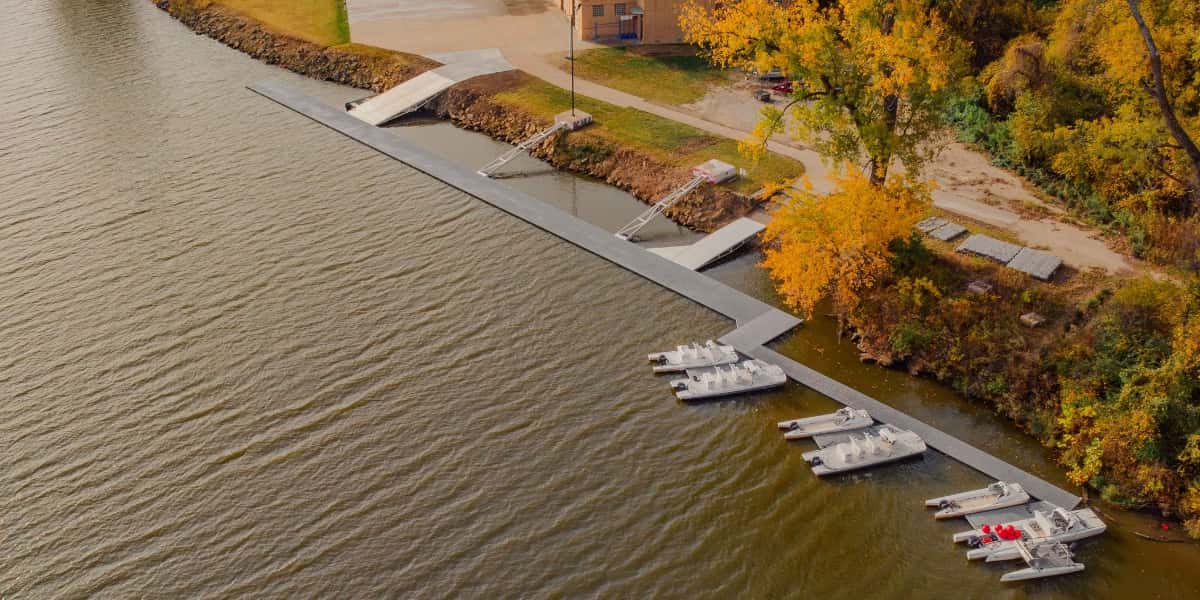
Dock Layout Ideas for Homes, Marinas, Rowing Venues, Camps, and Parks
If you’re searching for dock layout ideas, you’re probably trying to answer one simple question:
“Which dock setup best fits our shoreline and the way people will use it?”
That’s a smart question, because a dock isn’t just a platform on the water. The layout affects safety, comfort, traffic flow, accessibility, and how easy it is to expand later. A layout that works great for a quiet waterfront home might be a total headache at a busy marina or a rowing venue.
Below is a friendly, easy-to-follow guide to dock layout ideas for different environments, like homes, marinas, rowing venues, camps, and public parks, plus a clear look at how floating dock plans help you build a dock that fits your needs now and can grow with you later.
Why Dock Layout Ideas Matter So Much
A dock can look amazing from the shore and still be the wrong dock for the job.
That’s because a dock isn’t just something you stand on: it’s a “working space” on the water. People walk on it.
People carry gear back and forth throughout the day. Boats are tied off, loaded, and prepared for departure. Kayaks are launched and retrieved as activities change.
Kids jump in and climb out. Staff move carts. In busy places, crowds gather. If the layout doesn’t match real-life use, problems show up fast.
When you’re researching dock layout ideas, you’re not only choosing a shape, you’re choosing how safe, comfortable, and usable your waterfront will be.
What Happens When Dock Layouts Aren’t Planned Well
Here are the most common issues people run into when a dock layout looks good on paper but doesn’t work in real life.
1. People bump into each other (or trip) in tight spaces
This is one of the first problems you notice, especially at marinas, parks, camps, and rowing venues.
When walkways are too narrow or turns are too tight, you get:
- Traffic jams where people can’t pass each other easily
- More chances of tripping over cleats, lines, or uneven connections
- Gear getting knocked into the water
- Awkward “squeeze points” where someone feels unsafe, especially kids or seniors
Real-life example: A dock might be fine for one couple walking out to a boat, but feel stressful when multiple families, coolers, and fishing gear show up at once.
2. Docks that feel shaky when several people are on them
A dock can feel solid when one person is standing still… and feel bouncy or unstable when:
- Several people walk on it at once
- People stand on one side while loading gear
- Kids run from one end to the other
- A group gathers in one spot (like a swim ladder or kayak launch)
That “shaky dock” feeling often comes from layout choices, like:
- Long, narrow runs without enough support
- Too much weight concentrated in one area
- Not enough flotation for real-world loads
- Layouts that allow twisting movement (especially at turns and connections)
The result is a dock that makes people nervous, even if it technically “works.”
3. Not enough room for gear, coolers, carts, or supplies
Most dock owners underestimate how much space they’ll actually use.
Even residential docks quickly fill up with:
- Coolers, fishing tackle, and bags
- Paddleboards, kayaks, and life jackets
- Dock boxes and storage bins
- Carts and wagons for gear
Commercial docks and public docks deal with even more:
- Fueling equipment and safety supplies
- Maintenance tools
- Staff carts
- Large groups showing up at once
If the layout doesn’t include wider areas or “passing zones,” the dock starts feeling cramped, messy, and unsafe.
4. Boat slips that are hard to enter and exit
At marinas (and even some residential setups), layout matters just as much in the water as it does on the dock.
A slip can be difficult to use when:
- There isn’t enough turning space in the fairway
- Slips are spaced too tightly for the boat sizes
- Wind or current pushes boats into awkward angles
- Finger piers are placed in a way that creates pinch points
When slips are frustrating, people bump pilings, scrape hulls, and struggle to dock, especially newer boaters.
5. A layout that’s difficult (or expensive) to change later
This is a big one.
Many people start with a layout that works “for now,” then realize later they want:
- A second slip
- A kayak launch
- A swim platform
- Dedicated fishing space
- ADA access
- Wider Walkways for public traffic
- Additional room for events or groups
If the layout wasn’t planned with flexibility in mind, changes can mean:
- Removing sections and rebuilding
- Re-permitting depending on the site
- Reworking connections and anchoring
- Spending more than expected to “fix” a design issue
A smart layout can save you from major regret later.
What Good Dock Layout Ideas Start With
Good dock layout ideas don’t start with shapes like “L” or “T.”
They start with one simple question:
How will this dock be used in real life every week, every season, every year?
Here are the key things to think through before you pick a layout.
1. Who will use the dock?
Different people move differently, and that matters.
Think about:
- Kids: they run, sit, climb, and tend to crowd around ladders and launch points
- Seniors: they may need stable surfaces, wider walkways, and fewer tight turns
- Staff and crews: they carry equipment and need clear access
- The public: public docks need more room, more safety planning, and often accessibility features
- Athletes (rowing venues): they need space and smooth flow for launching shells
If you design for the “average user,” the dock often fails the moment a group shows up.
2. How many people will be on it at once?
This is where many projects go wrong.
Ask yourself:
- Is this for one family or many visitors?
- Will groups gather for events, lessons, or tournaments?
- Is this a marina where dozens of people may be walking the dock at once?
- Will there be lines at certain areas (fuel dock, kayak launch, swim ladder, rowing dock)?
The more people you expect, the more the layout needs:
- Wider walkways
- Passing space
- Clear traffic flow
- Extra stable sections (especially at gathering points)
3. What will people be doing on the dock?
This is the “activity map” that makes layout decisions easier.
Common dock activities include:
- Boating: tying up, boarding, loading supplies
- Swimming: ladder access, supervision zones, safe entry points
- Kayaking/paddling: low, stable launch areas, clear staging space
- Fishing: wider platforms and room to cast safely
- Rowing: long, clear launch lines and smooth movement ramps
- Work use: carts, tools, heavy loads, and frequent traffic
Each activity has different layout needs.
Quick tip: If your dock needs to support multiple activities, the best layout usually includes separate zones so people aren’t competing for the same space.
4. What does the water do?
The water conditions surrounding your dock influence your layout far more than most people expect. Consider the following factors:
- Waves and Wakes: How frequently do passing boat wakes impact your dock?
- Current: Does water flow strongly along your shoreline?
- Water Level Fluctuations: Account for tides, seasonal changes, or rising/falling lake levels.
- Wind Exposure: Does the prevailing wind push boats into their slips or against the dock structure?
- Substrate Conditions: Is the bottom mud, sand, rock, or heavy vegetation? This directly impacts anchoring and overall stability.
A layout designed for calm water may prove unstable or difficult to navigate in choppy, high-current environments.
When planning your dock, comprehensive boat dock designs and plans should account for these water conditions from the very beginning of the design process.
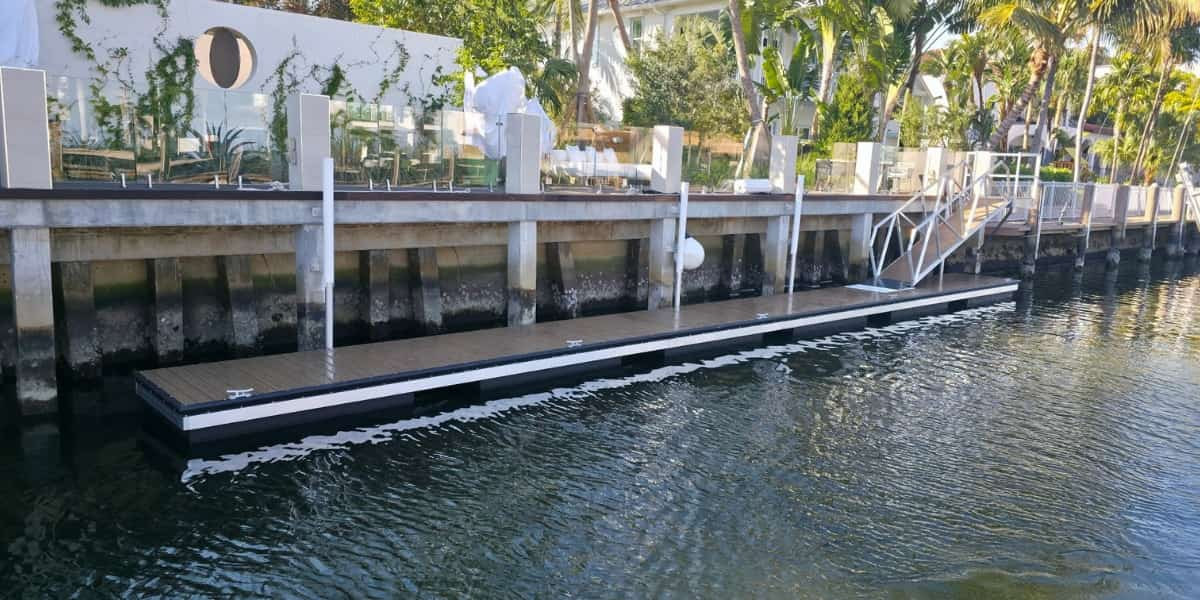
Dock Layout Ideas for Waterfront Homes
For homeowners, dock layouts usually focus on easy access, comfort, and simple boat use. The goal is a dock that feels stable and makes it easy to enjoy the water.
Popular residential dock layouts
- Straight dock (simple walkway)
This is the classic “walk straight out from shore” setup. It works well for smaller watercraft and simple access. - L-shaped dock
An L-shape gives you more side space for tying up a boat or sitting near the end. - T-shaped dock
A “T” adds more space at the end, which can help with boat tie-off and gives you room to move around. - Multi-Use dock
If you want a spot for swimming, lounging, or launching kayaks, a platform layout can be perfect.
Understanding the key differences between floating dock vs fixed dock options helps homeowners choose the layout approach that works best for their specific water conditions and long-term needs.
What homeowners should think about
- Water depth: Is it deep enough year-round for your boat?
- Water level changes: Do levels rise and fall seasonally?
- What you’ll launch: Boat, jet ski, kayak, paddleboard, or all of the above?
- Space and safety: Do you want room for seating, steps, or a ladder?
- Future upgrades: Might you add a lift, a bigger platform, or extra sections later?
A big benefit of modular systems is that you can start with a simple design and expand it as your needs change.
Dock Layout Ideas for Marinas and Busy Waterfronts
Marinas are a different world. They need layouts that handle high traffic, heavy use, and lots of boats. Smart layout planning here can improve safety and make daily operations smoother.
Common marina dock layouts
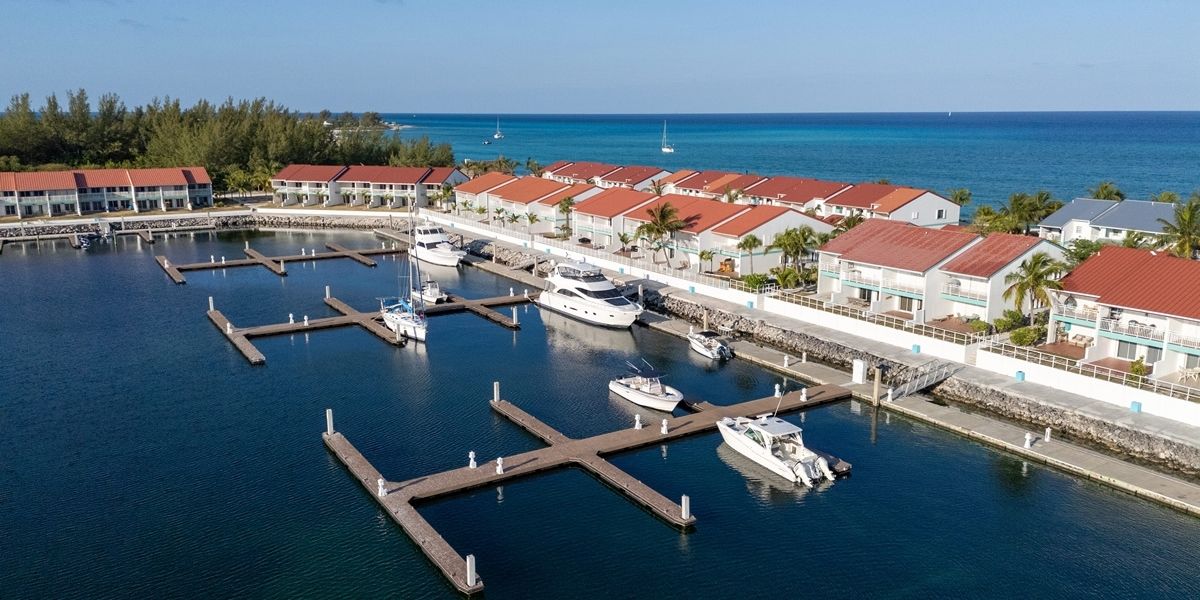
- Main dock with finger piers
A main walkway runs out, and “finger” docks branch off to create slips. This is one of the most common marina setups. - U-shaped or basin layouts
These can hold many slips in a compact area and help organize boat movement. - Parallel slip layouts
Some marinas use long dock runs with slips on both sides, depending on water width and traffic. - Separate service areas
Many marinas separate areas like fuel docks or pump-out stations from regular foot traffic.
What marinas need to plan for
- Safe walkway width for people carrying gear
- Slip spacing so boats can enter and exit without stress
- Load strength for carts, supplies, and maintenance equipment
- Utilities like water, power, and lighting
- Long-term durability because marinas see constant use
With the right layout, a marina feels organized and easy to navigate. With the wrong layout, it feels crowded and risky.
Dock Layout Ideas for Rowing Venues and Boathouses
Rowing docks need special attention. Rowing shells are long, lightweight, and easy to damage. The layout should support smooth movement for athletes and coaches while keeping launches efficient.
Great rowing dock layout options
- Low-freeboard launch docks
Rowers often need docks that sit lower to the water for easier entry and exit. - Long, linear launch docks
A long dock makes it easier to line up crews and launch multiple shells without crowding. - Angled or staged launch areas
Some venues use angled sections or separate staging zones so teams can prepare without blocking the launch point. - Coaching and safety platforms
Many rowing venues benefit from dedicated areas for coaches, safety teams, or event operations.
What matters most for rowing dock layouts
- Consistent height above the water
- Wide walking space for teams carrying shells
- Stable, non-slip surfaces
- Smooth flow so crews don’t collide or wait too long
Rowing venues often use layouts that can be adjusted for events, practice seasons, or regattas.
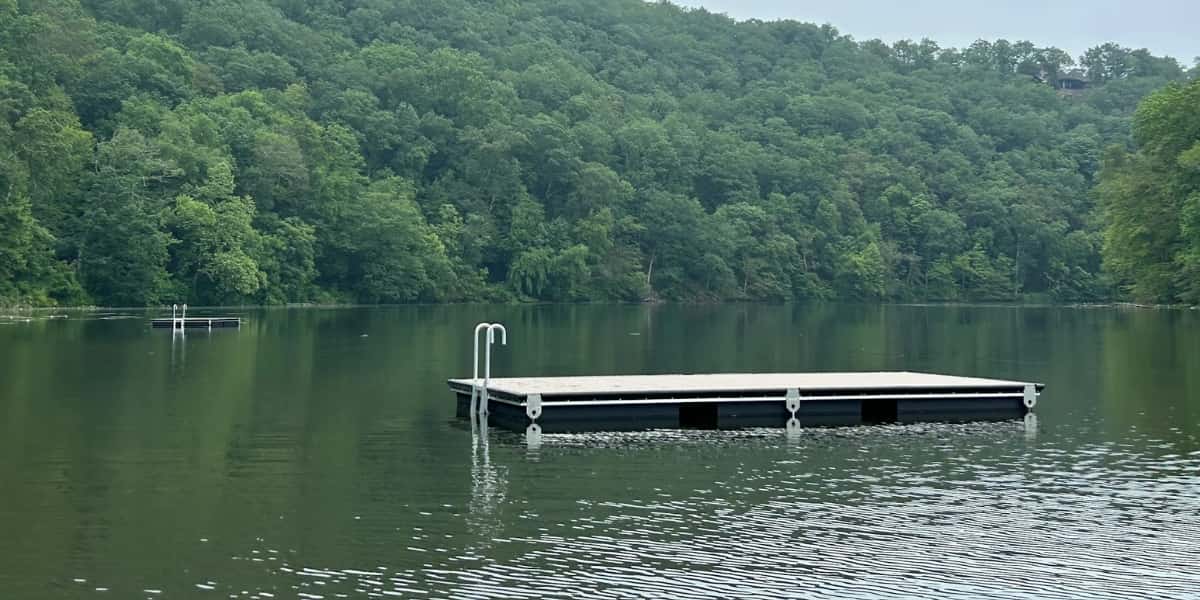
Dock Layout Ideas for Camps and Youth Programs
Camps need docks that support multiple activities and keep safety and supervision front and center. Most camps use docks for swimming, boating, lessons, and group activities.
Popular camp dock layouts
- Swim platform with perimeter access
A central swim platform can be paired with connecting walkways so staff can supervise easily. - Multi-arm layout
Different dock arms can be used for different activities, like one for swimming, one for sailboats, and one for kayaks. - Floating “island” style platforms
These can be used for instruction, rest breaks, or controlled access for lessons. - Separate launch areas
Keeping boating launches away from swim zones can help reduce accidents and confusion.
Camp dock design priorities
- Clear zones for swimming vs. boating
- Slip-resistant surfaces
- Easy supervision (good sight lines help)
- Seasonal setup and storage options
- Durability for heavy group use
A well-planned camp dock layout makes daily activities safer and easier for staff.
Dock Layout Ideas for Parks and Public Waterfronts
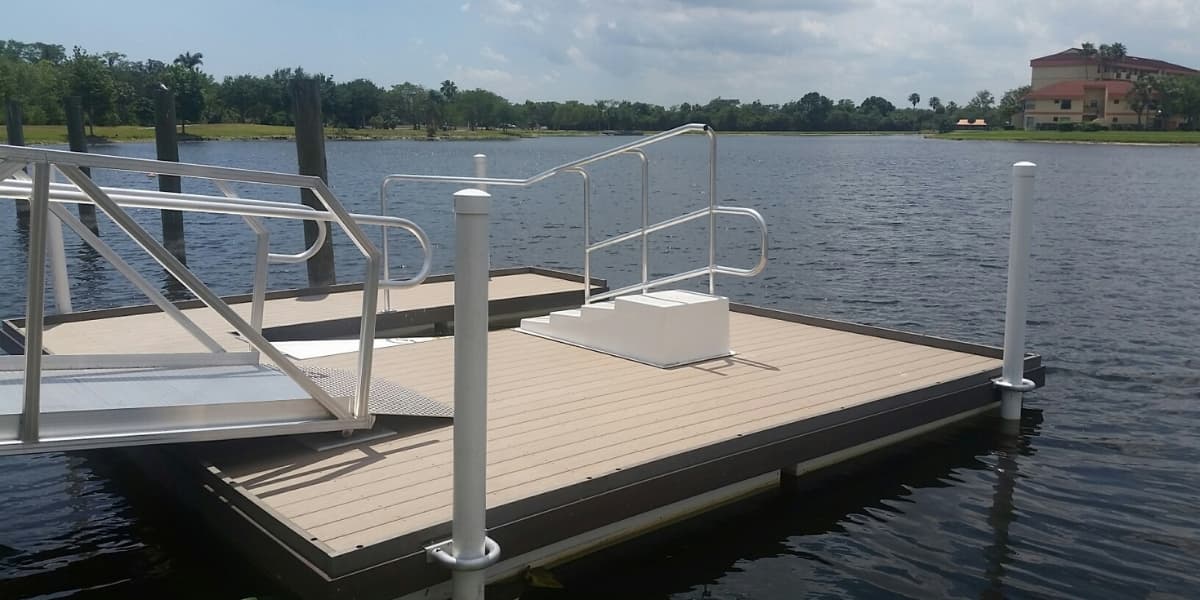
Public parks and government-owned waterfronts need docks that handle high foot traffic, support different users, and often meet ADA accessibility requirements.
Common public dock layouts
- ADA accessible dock with gangway
These designs help provide safe access for wheelchairs, strollers, and anyone who benefits from a smooth ramp. - Fishing piers and platforms
A wider platform area gives anglers room to spread out safely. - Kayak launch docks
Some parks include dedicated launches with stabilizing features to make entry easier. - Multi-use community docks
These docks are often designed to support fishing, small boat access, and general recreation.
What public docks should include
- Wide walkways to reduce congestion
- Integrated benches for quiet reflection
- Floating gazebo that serves as a shaded social centerpiece
- Railings and safety features where needed
- Strong frames and flotation built for constant use
- Simple maintenance for long-term cost control
- Clear design that helps visitors move safely
Public spaces often need docks that are both durable and welcoming.
Floating Dock Plans: How Layouts Come to Life
If you’ve been looking at dock layout ideas, you’ve probably noticed something: a dock can look perfect in a picture but still feel awkward or unstable in real life.
That’s why the best layouts aren’t built from rough sketches alone. They’re built from smart floating dock plans: real planning that matches how the dock will actually be used day-to-day.
Think of floating dock plans like the “blueprint” behind a dock that feels solid, safe, and easy to move around on. When the plan is done right, the dock works smoothly. When it’s not, you’ll feel it right away: wobbling sections, crowded walkways, and tight corners that make simple tasks harder than they should be.
A big benefit of modular floating dock systems is that you can start with a simple design and expand it as your needs change without rebuilding from scratch.
Below is a complete, easy-to-understand breakdown of what matters in floating dock plans and why these details bring your dock layout ideas to life.
Floating Dock Plans That Match Real Use
The best floating dock plans don’t start with “What shape looks cool?”
They start with questions like:
- How many people will use the dock at one time?
- Will people carry gear, coolers, fishing equipment, or rowing shells?
- Will carts or utility vehicles be used?
- Will it be public (park/marina) or private (home/camp)?
- Do you need ADA friendly access?
- What does the water do here? Is it calm, choppy, tidal, or windy?
A dock plan that matches real use helps you avoid the most common frustrations, like:
- A dock that feels “springy” underfoot
- Not enough room for people to pass each other
- Awkward turning space near slips or launch points
- Dock sections that shift or loosen over time
- A layout that’s hard to expand later
In other words, floating dock plans make sure your dock isn’t just a shape. It’s a system that works.
What Good Floating Dock Plans Include (And Why It Matters)
1. How Flotation Is Distributed for Stability
Flotation is the “foundation” of a floating dock. It’s what keeps the dock level and stable.
A good plan looks at:
- Where the flotation sits under each dock section
- How evenly it’s spread out
- How the dock behaves when weight shifts (like when people walk to one side)
Why this matters: Even if a dock has enough flotation overall, it can still feel unstable if the flotation isn’t balanced correctly. That’s when you get the “tilt” feeling, like the dock leans when someone steps near an edge.
How do I know if a dock will feel stable?
Look for plans that consider weight distribution and flotation placement under each module, not just total buoyancy.
2. Load Ratings Based on Real-World Foot Traffic and Equipment
It’s easy to underestimate how much weight a dock needs to handle.
A smart floating dock plan accounts for:
- Normal daily use (people walking, fishing, lounging)
- Peak use (groups, events, busy weekends)
- Gear and equipment (coolers, kayaks, rowing shells, fuel carts)
- Work needs (maintenance crews, marina supplies, dock boxes)
Why this matters: A dock can be “fine” for two people but feel completely different with ten people, a cart, and gear. Good plans don’t guess. They design for realistic loads.
What’s the difference between ‘looks strong’ and ‘is strong’?
Load ratings are the difference. They’re the engineering behind whether a dock performs safely over time.
3. Frame Stiffness and Reinforcement for Long-Term Strength
The frame is the dock’s skeleton. If it’s too flexible, the dock may bounce, twist, or feel shaky, especially where sections connect.
Good plans consider:
- Frame materials and thickness
- Cross bracing or reinforcement
- How the dock handles twisting forces from waves, wakes, and uneven loads
Why this matters: Frame stiffness directly affects comfort. A stiff, well-reinforced dock feels solid underfoot, even when water conditions change or heavy use happens.
Why do some floating docks feel “wobbly”?
Often it’s a combination of frame flex + poor flotation distribution + loose connections.
4. Connection Systems Between Modular Sections
This is a big one. Modular docks are great because they’re customizable, but only if the connection system is strong and designed correctly.
A solid floating dock plan includes:
- Connection points placed in the right locations
- Hardware built for the environment (freshwater, saltwater, high-wake areas)
- Connections that reduce movement between sections
- Planning for expansion without weakening the original layout
Why this matters: Loose or undersized connections can make a dock feel like it’s made of separate pieces instead of one stable walkway.
Do modular docks always feel like they move more?
Not if the connection system is designed properly. Good connections are what make modular docks feel “together,” not “separate.”
5. Site Conditions Like Waves, Currents, and Changing Water Levels
This is where “one-size-fits-all” dock layouts break down.
Floating dock plans should match the actual site, including:
- Wave action and boat wakes
- Wind exposure
- Currents
- Tidal changes or lake level shifts
- Bottom conditions (mud, sand, rock, vegetation)
Why this matters: A dock that works well on a calm pond may need completely different planning on a windy lake, tidal river, or busy marina basin.
Do I really need to plan for wakes and wind?
Yes, because those forces can affect dock movement, alignment, and long-term wear.
6. Room to Expand in the Future
Even if you don’t need a massive footprint today, your needs might evolve. Smart floating dock designs incorporate future-proofing by allowing for seamless additions:
- Marinas: Expansion for extra slips or finger piers.
- Residential: Swim platform and entertaining area
- Rowing Venues: Integrated launch arms
- Public Spaces: ADA compliant access or dedicated swim platforms
- Commercial Sites: Staging areas and heavy-duty work platforms
Why this matters: If you plan for expansion early, you can grow the dock without redoing everything.
What if I’m not sure what I’ll need later?
That’s exactly when planning matters most. Modular dock systems can be designed so upgrades are simple later.
Choosing the Right Layout
When you’re researching dock layout ideas, the best place to start is with one question: “What will people do on this dock every day?”
From a quiet home dock to a busy marina, a rowing venue, a camp waterfront, or a public park, the right layout improves safety, flow, and long-term value. With well-designed floating dock plans, you can build a dock that fits your needs today and adapts for tomorrow.
Want help turning dock layout ideas into a real, workable design? Contact AccuDock to learn more about our modular floating dock systems.
AccuDock is a global leader in the design and manufacturing of Floating Docks
CALL 954.785.7557 OR EMAIL [email protected] FOR MORE INFORMATION