

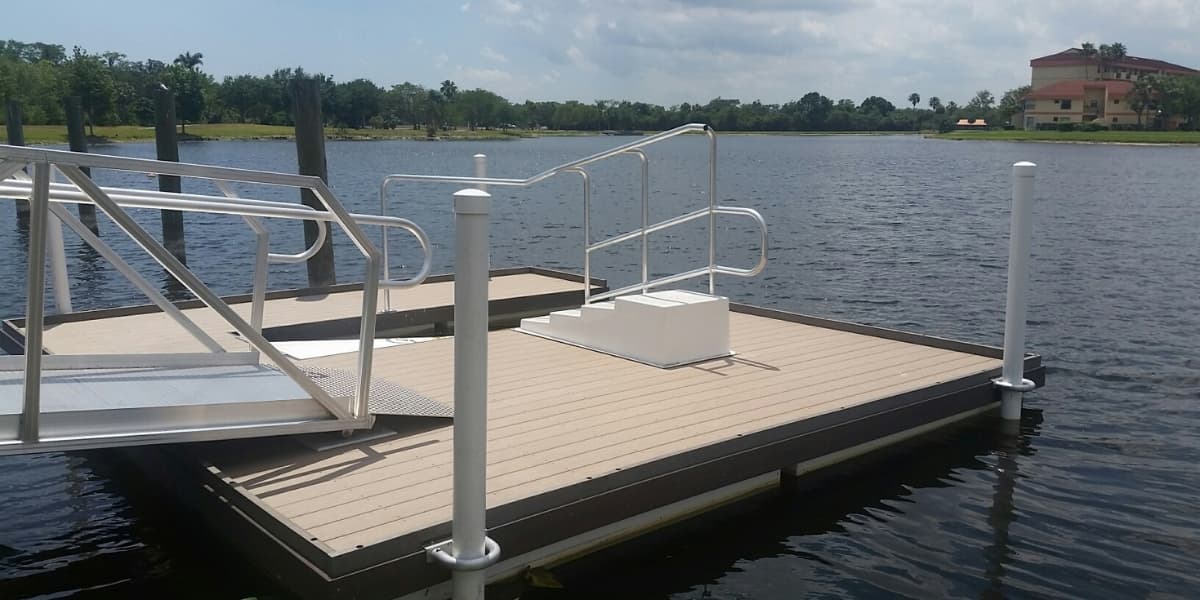
Floating Dock Stability Explained: Why Some Docks Feel Solid and Others Do Not
If you’ve ever stepped onto a dock and thought, “Whoa… this feels wobbly,” you already understand why floating dock stability matters. A floating dock is supposed to move with the water, but it shouldn’t feel like a trampoline or a tipping raft every time someone walks across it.
In this blog, we’re going to break down floating dock stability in a simple, real-world way. You’ll learn what makes some floating docks feel steady and solid, why others feel bouncy or shaky, and what to look for if you’re comparing docks for a home, marina, commercial property, or government project.
We’ll also cover how to secure a floating dock, because even a well-built dock can feel unstable if it isn’t anchored and installed the right way.
What Does “Floating Dock Stability” Really Mean?
Floating dock stability is just a simple way of saying: How steady does the dock feel when people actually use it?
Floating docks are designed to float and move with the water. That movement is normal, and honestly, it’s one of the biggest benefits of a floating dock. But there’s a big difference between a dock that moves smoothly and a dock that wobbles, tilts, or feels unsafe.
A stable floating dock feels predictable. You step on it, walk across it, and it responds in a calm, controlled way, even when the water isn’t perfectly calm.
Understanding the basic principles of how do floating docks work helps you appreciate why proper stability design is so important to the overall floating dock experience.
The “Feel Test”: What a Stable Dock Feels Like
When floating dock stability is good, you’ll usually notice these things right away:
- It feels level when you step on it: You don’t feel like you’re stepping onto something that’s about to tip.
- It doesn’t tilt dramatically when someone walks near the edge: If one person walks along the side, the dock shouldn’t “lean” like a canoe.
- It doesn’t bounce a lot with normal foot traffic: Some gentle movement is normal, but it shouldn’t feel like a trampoline.
- It handles boat wakes without feeling out of control: Wakes happen, especially in marinas or busy waterways. A stable dock reacts, but it stays composed.
- It moves up and down smoothly instead of rocking side to side: Vertical movement (up/down) is usually more comfortable than side-to-side rolling.
In short: A stable dock feels solid enough that most people stop thinking about it after the first step.
What an Unstable Dock Feels Like (And Why People Notice Immediately)
A less stable dock can make people nervous fast, especially kids, older adults, or anyone carrying gear.
You may notice things like:
- It dips or tips when one person steps on a corner: This often means the dock isn’t distributing buoyancy (float support) evenly.
- It feels springy or soft in the middle: That can happen when the frame flexes or the dock is under-supported.
- It rocks side to side when waves hit: Side-to-side “rolling” is one of the most uncomfortable types of motion.
- It shifts around or drifts out of alignment over time: This can be a securement or anchoring issue, or a sign the dock isn’t built to handle the conditions.
Bottom line: If you’re constantly adjusting your balance while walking, the dock’s stability isn’t where it should be.
The Key Idea Most People Miss: Floating Docks Will Always Move
Here’s the important part: Floating docks are supposed to move. That’s not a flaw: it’s the point.
Because they float, they:
- Rise and fall with changing water levels
- Respond to small waves and wakes
- Adjust with tides (where applicable)
So the goal isn’t “no movement.” The goal is controlled movement, or movement that feels smooth, steady, and safe.
A great floating dock moves in a way that makes you think: “Yep, this feels secure.”
A poorly designed or poorly installed dock moves in a way that makes you think: “I don’t love this … what happens when a bigger wake hits?”
What Causes the Difference in Stability?
Most of the time, floating dock stability comes down to a few core factors:
1. Buoyancy Placement (Where the Float Support Is)
A dock feels stable when its flotation is spread evenly and sized correctly. If float support is uneven, the dock can tip when weight shifts.
2. Dock Width and Layout
Wider docks tend to feel steadier. Narrow docks can feel “tippy,” especially when people walk along the edge.
3. Frame Strength (How Much the Dock Flexes)
Any flex in the dock frame is immediately noticeable. A robust frame ensures a stable, solid feel underfoot, eliminating the ‘bouncy’ sensation common in weaker structures.
4. Connections Between Sections (For Modular Docks)
If sections connect loosely, the dock can move like separate pieces instead of one stable platform.
5. Securement and Anchoring (How the Dock Is Held in Place)
Even a good dock can feel unstable if it drifts or twists because it isn’t secured properly.
For docks in high-wake or exposed conditions, additional dock stabilizer components can significantly improve the overall stability and user experience.
Why Some Floating Docks Feel Solid and Others Do Not
If you’ve ever stepped onto a floating dock and immediately thought, “This feels solid,” or “This feels sketchy,” you’re not imagining things. Floating dock stability is real, and it isn’t a matter of luck. Some docks feel rock-solid because of specific, intentional design choices: flotation type, width, frame strength, and the way the sections connect.
A floating dock is designed to move vertically with the water that’s the whole point. What people want to avoid is “secondary movement,” such as side-to-side rocking, tipping at the edges, bouncing in the middle, or the feeling that the dock is “rolling” underfoot. These stability issues usually stem from a few common culprits.
Below is a thorough, easy-to-understand breakdown of what makes the difference, along with answers to the most common questions people ask when comparing dock systems
What Makes a Floating Dock Feel Stable?
A floating dock feels stable when:
- Flotation is balanced (even support under the dock)
- The dock is wide enough for the way it’s being used
- The frame is stiff and reinforced (doesn’t flex or twist)
- Sections are connected tightly so they move together
- The dock is installed correctly and secured for the site (waves, wake, wind, depth)
If one part is weak, the dock may still float, but it won’t feel solid.
1. Flotation: The “Float” System Matters More Than People Think
Every floating dock stays up because of flotation, usually foam-filled floats or other buoyant components. But flotation isn’t just about “keeping the dock above water.” It’s about how the dock carries weight and how it reacts when weight shifts.
What flotation does for stability
Good flotation helps a dock:
- Stay level when people walk from one side to the other
- Resist tipping when someone steps near the edge
- Reduce the “bounce” you feel in the deck
- Handle wakes without feeling unpredictable
For good floating dock stability, flotation needs to be:
- Evenly spread out across the dock: Think of flotation like support points. If support is uneven, the dock will rock.
- Sized correctly for the dock’s weight and its load rating: A dock used for calm residential lounging has different needs than a dock used for carts, coolers, or heavy foot traffic.
- Designed so the dock stays level when weight shifts: People don’t stand still. They move, gather near corners, load gear, step on and off boats. Flotation needs to handle that without dramatic tilting.
What happens when flotation is uneven (or not enough)
If flotation is poorly planned, the dock may:
- Tilt when someone steps near an edge
- Bounce when people walk across it
- Feel “tippy” when the load changes
- Sit lower in the water than it should (which can make movement feel worse)
A simple way to picture it
Think of a table. If the legs aren’t spaced correctly, or one leg is shorter, the table wobbles. A dock works the same way, except it’s floating. If the “support” underneath isn’t balanced, your feet feel it immediately.
2. Dock Width: Wider Often Feels More Stable
Dock width is one of the fastest ways to influence how a dock feels. A wider dock has a bigger footprint on the water, which helps it resist tipping and rolling.
Why width matters for floating dock stability
A wider dock:
- Spreads weight over a larger area
- Makes it harder for the dock to “roll” when someone steps near the edge
- Feels more comfortable for passing people, carrying gear, or standing side-by-side
In general:
- Narrow docks can feel more “tippy,” especially at the edges
- Wider docks spread weight out better
- Wider docks are often more comfortable for groups, carts, and gear
Where width matters the most
Dock width becomes a big deal for:
- Marinas with lots of foot traffic: People constantly move, pass each other, and load supplies.
- ADA accessible docks: Accessibility needs often include wider walkways and gentler movement.
- Commercial platforms where people carry equipment: Tools, carts, coolers, tanks, and work gear add shifting load.
“Can I make a narrow dock feel stable by anchoring it better?”
Better anchoring helps control sideways drifting, but it won’t fully fix a dock that feels tippy due to width or buoyancy design. Width affects balance in a way anchoring can’t completely replace.
3. Frame Strength: The Dock’s “Skeleton” Affects Stability
The frame is the structure that holds everything together. It supports the deck surface and ties flotation into one unified platform. If the frame is strong and well-built, the dock feels tighter and more solid.
How frame strength improves floating dock stability
A strong frame improves stability by:
- Reducing flex (bending or twisting): Less flex means less bounce underfoot.
- Keeping the dock level under load: When multiple people stand in one spot, a stiff frame helps the dock behave predictably.
- Helping sections move together instead of fighting each other: A well-engineered frame distributes forces instead of letting one area “give” more than another.
Signs of a weak frame or poor bracing
If a frame is weak or poorly braced, you may notice:
- “Soft spots” where the dock feels bouncy
- Twisting when people walk across it
- Extra movement during wakes or wind
- Connections loosening over time (because the structure is constantly flexing)
This is why many high-performance dock systems use durable, marine-ready materials and reinforced framing. The dock has to stay rigid enough to feel solid, even though it floats.
4. Connections: Loose Dock Sections Create Extra Movement
Modular floating docks are popular because they’re customizable and expandable. You can add sections, change layouts, and fit the dock to your shoreline. But modular only works well when the connection system is built for long-term performance.
Why connections matter for floating dock stability
Connections determine whether the dock acts like:
- One stable platform (good)
- A chain of separate pieces (not so good)
When dock sections connect tightly and correctly:
- The dock feels smoother to walk on
- Movement is more controlled
- The system handles wakes more predictably
When connections are loose or poorly designed, you might notice:
- One section moving differently than another
- Extra rocking at the joints
- A “wave” feeling as you walk across sections
- Increased wear on hardware because sections “work” against each other
Good modular systems are designed so connections are strong, aligned, and built to handle movement without becoming sloppy over time.
AccuDock achieves this through a rugged marine-grade aluminum frame and high-strength stainless steel hardware. This internal structure ensures that each module stays perfectly aligned, providing a solid, stable surface that won’t flex or “work” itself loose. By prioritizing these premium materials, AccuDock floating docks maintain their professional fit through years of wave action and heavy use.
When you’re comparing docks, remember this: floating dock stability comes from multiple design choices working together. You don’t want a dock that just “floats.” You want one that feels secure, predictable, and comfortable in real conditions: foot traffic, shifting weight, boat wakes, and changing water levels.
Environmental Conditions That Can Affect Floating Dock Stability
Even a great dock can feel different depending on the water conditions. Stability isn’t just about the dock: it’s also about where it’s installed.
Common conditions that change how a dock feels:
- Boat wakes: Frequent wake action can make light docks move more
- Wind exposure: Wind can push docks sideways if they aren’t secured well
- Tides and changing water levels: The dock must move up and down without binding
- Water depth and bottom type: This affects how anchoring systems perform
- Current: Strong current can create constant lateral pressure
This is why it’s important to match the dock design and securement method to the actual environment, not just the “average day” water conditions.
How to Secure a Floating Dock for Better Stability
If you’re researching how to secure a floating dock, here’s the simplest truth: the securement system controls side-to-side movement and helps the dock stay aligned.
A dock that isn’t properly secured can:
- Drift out of position
- Pull unevenly on connectors
- Rock more than it should
- Wear out faster from constant stress
The best method depends on your site (depth, tides, current, bottom type, and use). Common options include:
- Piling systems: Great for areas with tides or water level changes
- Stiff-arm systems: Help control movement while allowing up/down motion
- Anchors with chains or cables: Often used in calmer water, but must be sized correctly
- Shore ramps with strong hinge points: Keeps the dock connected to shore without creating instability
A well-designed dock system usually includes recommendations based on how and where you’ll use it.
How to Secure a Floating Dock for Long-Term Performance
When thinking about how to secure a floating dock, don’t just focus on “today.” Think about storms, seasons, and long-term wear.
For long-term floating dock stability, you want:
- Hardware and connectors rated for marine use
- Proper spacing and alignment of anchor points
- Securement that allows vertical movement without binding
- A setup designed to handle wakes, wind, and regular use
Even the best dock can feel unstable if the securement method is wrong for the location, so this part really matters.
Stability Needs: Residential vs Marina vs Commercial
Not everyone needs the same level of performance. The right dock depends on how it will be used.
Residential Homeowners
Most homeowners want a dock that:
- Feels comfortable and steady underfoot
- Works well for swimming, fishing, and relaxing
- Handles occasional guests without feeling shaky
Marinas
Marinas often need:
- Stable walkways and slips for constant foot traffic
- Layout flexibility for changing slip needs
- A dock that feels safe even when the marina is busy
Commercial and Government Projects
These users typically require:
- Higher load capacity
- Stronger structural design
- ADA accessible features (in many cases)
- Long-term durability and support
In these settings, floating dock stability is not a “nice bonus.” It’s a major requirement.
Common Mistakes That Lead to Unstable Floating Docks
A dock doesn’t have to feel “wobbly” just because it floats. In most cases, instability comes from a few common planning or installation mistakes, usually made with good intentions (like trying to save money or keep the dock smaller). The good news is that floating dock stability problems are often preventable when the dock is designed for the way you’ll actually use it and the conditions it will live in.
Here are the biggest mistakes that can make a floating dock feel shaky, bouncy, or unsafe, and what to do instead.
1. Choosing a dock that’s too narrow for the traffic level
A narrow dock can look fine on paper, but feel “tippy” in real life, especially when:
- Two people pass each other
- Someone sits on the edge
- Kids run or jump off
- People carry coolers, fishing gear, or paddles
Why it causes instability
Narrow docks have less “footprint” on the water, which makes them easier to roll side-to-side. The edge feels less secure, and weight shifts are more noticeable.
What to do instead
Match dock width to the real situation:
- Light residential use can sometimes work with narrower layouts
- Busy residential, marina, or commercial use usually needs wider walkways and platforms
- If you need ADA accessibility, extra width and steady transitions matter even more
Is a wider dock always better?
Not always, but wider usually feels more stable. The “best” width depends on how many people will use it and what they’ll be carrying.
2. Underestimating load needs (people + gear + carts add up fast)
This is one of the most common causes of long-term wobble and sagging.
Many buyers plan for “a few people,” but real life looks like:
- Family gatherings
- Fishing trips with loaded coolers
- Marina foot traffic all day
- Dock carts, tools, or maintenance equipment
- Kayaks, paddleboards, or small watercraft staging
Why it causes instability: When the dock is consistently loaded near (or over) what it was designed for, it can sit lower in the water and respond more dramatically to movement. Over time, stress can also loosen connections and increase flex.
What to do instead: Think in “worst case” scenarios:
- How many people might be on the dock at once?
- Will you ever use carts or wheeled equipment?
- Do you need sections for staging gear or boarding?
What happens if my dock is overloaded once?
One-time overload may not ruin a dock, but it can create unsafe conditions in the moment. Repeated overload is what usually leads to long-term stability issues and faster wear.
3. Using flotation that isn’t sized for real-world use
Flotation is not just about “will it float?” It’s about how it floats.
Why it causes instability
If flotation is undersized or unevenly distributed, the dock can:
- Tilt when someone steps near an edge
- Bounce more when people walk
- Dip under heavier spots (like where people gather)
- Feel unstable during wakes
What to do instead
Look for flotation that is:
- Properly rated for the dock’s intended load
- Evenly placed so buoyancy is balanced across sections
- Designed to keep the dock level as weight shifts
If it floats, isn’t it fine?
Not necessarily. Two docks can both “float,” but one can feel solid and the other can feel like a bobbing platform. The difference is flotation design and distribution.
4. Cutting corners on connections and hardware
Connections are a big deal in modular docks. If the joints aren’t strong and tight, sections can move out of sync.
Why it causes instability
Loose or low-quality connections can lead to:
- “Rattle” or clunking at joints
- Different sections rocking in different directions
- A wave-like feeling as you walk across
- Faster wear and loosening over time
Hardware matters, too, especially in marine environments where corrosion and constant movement are normal.
What to do instead
Choose systems with:
- Strong, proven connection designs
- Marine-grade hardware meant for long-term water exposure
- Proper bracing so the dock behaves like one stable platform
Can I tighten or replace hardware later?
Sometimes yes, but it’s better to start with the right components. If the connection system itself is weak, “tightening” won’t fully fix the root problem.
5. Picking a securement method that doesn’t match the site conditions
This is where many floating docks fail, because the dock itself may be fine, but it’s not held in place correctly.
If you’re researching how to secure a floating dock, here’s the key: securement controls side-to-side movement and helps keep the dock aligned.
Why it causes instability
If the dock can drift, twist, or pull unevenly, it can feel unstable even if the deck and frame are high quality.
Securement issues often show up when there is:
- Regular boat wake
- Current or wind exposure
- Tidal changes or big water-level swings
- Soft or shifting lake/river bottoms
What to do instead
Match securement to your environment:
- Piling systems are great for changing water levels
- Stiff-arm systems can help control horizontal movement
- Anchors and chain systems may work in calmer areas (when designed correctly)
- Shore ramps need strong hinge points and proper angles
Which securement method is best?
There’s no one best method. The right answer depends on water depth, bottom conditions, wind, wakes, and how much water level changes throughout the year.
6. Installing without proper alignment, spacing, or bracing
Even a well-designed dock can feel unstable if installation is rushed or uneven.
Why it causes instability
Poor installation can lead to:
- Sections that don’t sit level with each other
- Uneven stress on connectors
- Extra flex or rocking at certain points
- A dock that “walks” out of position over time
What to do instead
A solid install focuses on:
- Straight alignment and consistent spacing
- Correct placement of anchor points or pilings
- Proper bracing where movement would otherwise concentrate
- A secure ramp transition (especially important for ADA)
Can an unstable dock be fixed later?
Often, yes, especially if the issue is securement, alignment, or connection tightening. But it’s usually cheaper and easier to get it right from the start.
Professional dock construction practices address these installation details from the start, preventing stability issues that are expensive to fix later.
What to Look for When You Want a Dock That Feels Solid
If you’re comparing dock options in the consideration stage, here are practical questions to ask:
- How is flotation distributed under each section?
- What load rating is the dock designed for?
- How stiff and reinforced is the frame?
- How do modular sections connect, and how tight is that connection?
- What securement methods are recommended for my shoreline or marina?
- Can the floating dock manufacturer customize the system for my exact needs (kayaks, rowing, ADA access, work platforms, etc.)?
A quality dock system should have clear answers to these questions, backed by proven design experience and real-world performance.
Floating Dock Stability Comes From Design + Installation
Ultimately, floating dock stability is the product of smart engineering and precise installation. A dock feels solid when flotation is balanced, frames are reinforced, and sections are tightly integrated.
However, performance is only as good as the installation. Learning how to properly secure your dock is just as vital as the purchase itself, the best system in the world won’t feel stable if it’s drifting, twisting, or straining against an improper anchoring system.
Whether you are planning a residential, marina, or commercial project, AccuDock provides modular solutions built for real-world conditions. Contact us to explore floating dock systems tailored to your specific goals.



AccuDock is a global leader in the design and manufacturing of Floating Docks
CALL 954.785.7557 OR EMAIL [email protected] FOR MORE INFORMATION


