

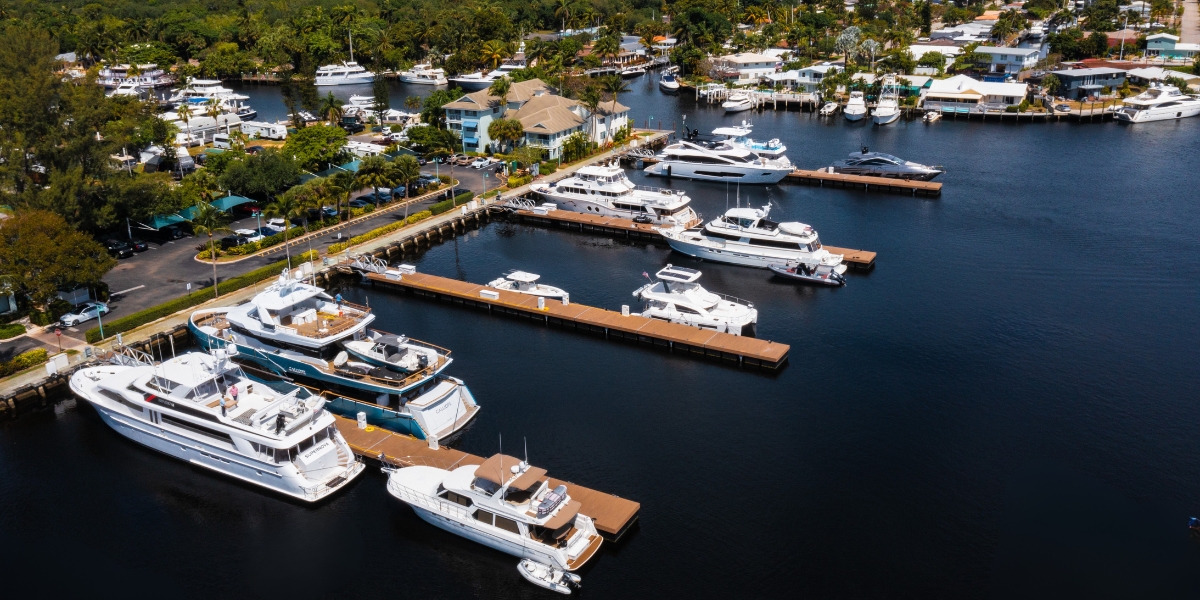
Maximizing Marina Slip Revenue with Smarter Dock Layout Design
Running a marina is about more than just offering a place to tie up boats. Every decision you make affects how much revenue your marina can generate. One of the most important factors is marina dock design. The way your docks are arranged can either help you make the most of your space or limit your earning potential.
A smart layout allows you to fit more usable slips, improve boat traffic, and create a better experience for your customers. On the other hand, a poor layout can lead to wasted space, frustrated boaters, and lost revenue.
In this guide, you will learn how better planning, smarter layouts, and practical design strategies can help you get more value from your marina.
Why Marina Dock Design Has a Direct Impact on Revenue
Marina dock design has a direct effect on how much money a marina can make. That may sound simple, but it is one of the most important ideas for marina owners, managers, and developers to understand. Your marina has a limited amount of waterfront and water space. In most cases, you cannot easily add more shoreline or expand into new water. Because of that, the way you use your existing space matters a great deal.
A smart dock layout helps you get more value from the space you already have. It can help you fit the right number of slips, improve how boats move in and out, reduce customer frustration, and create a better overall experience. All of those factors affect occupancy, pricing, customer retention, and long term profitability.
Put simply, marina dock design is not just a construction decision. It is a business decision.
How Marina Dock Design Increases Revenue
A well planned marina can increase revenue in several ways at the same time. Instead of relying on only one improvement, a strong layout supports better performance across your entire operation.
Here are some of the biggest ways marina dock design affects revenue:
- It can increase the number of rentable slips without expanding your footprint
- It can make docking easier and faster, which improves the customer experience
- It can improve safety for boaters, staff, and guests
- It can attract more customers by offering a layout that feels organized and easy to use
- It can support higher pricing for premium slips with better access, views, or convenience
These benefits work together. For example, a marina with easy navigation and well sized slips is more likely to stay full. A marina that stays full more often has more pricing power. That same marina may also spend less money dealing with damage, complaints, and operational problems.
More Slips From the Same Space
One of the clearest financial benefits of better marina dock design is the ability to create more usable slips from the same amount of water. This does not mean cramming boats into every open area. It means using the layout wisely.
A smart design can improve space usage by:
- Reducing wasted gaps between docks
- Positioning finger piers more efficiently
- Choosing dock angles and fairway widths that support safe movement
- Matching slip dimensions to the types of boats that actually use the marina
This matters because every usable slip is a potential source of recurring revenue. If a marina can increase capacity by even a small percentage, that can add up quickly over time.
For example, adding 10 new rentable slips may not seem dramatic at first. However, when those slips are rented month after month, the added income can become a major gain. That is why layout planning deserves serious attention early in the process.
Easier Docking Leads to Better Customer Retention
Boat owners do not just pay for a place to tie up. They also pay for convenience, confidence, and peace of mind. If a marina is difficult to enter or the slips are hard to reach, customers notice right away.
A better marina dock design helps with:
- Clear travel paths from the marina entrance to the slip
- Better turning room for different vessel sizes
- Reduced stress during docking
- Faster arrivals and departures
- Less confusion for new or visiting boaters
These features may seem operational, but they affect revenue in a real way. Customers are more likely to renew when their docking experience is easy and predictable. They are also more likely to recommend the marina to others.
In competitive markets, ease of use can be the reason a customer chooses one marina over another.
Safety Protects Revenue
Safety is another major reason marina dock design affects profitability. A safer marina is not only better for people and boats, it is also better for business.
Good design can lower the risk of:
- Boat collisions in tight fairways
- Damage to docks and equipment
- Trips and falls on poorly planned walkways
- Congestion during busy hours
- Difficult emergency access
When a marina has fewer accidents and fewer close calls, it often sees fewer disruptions, fewer repairs, and fewer unhappy customers. Safety problems can be expensive, both directly and indirectly. They can lead to repair costs, higher liability exposure, poor reviews, and lost trust.
That is why layout planning should always consider how people and boats move through the marina, not just how many slips can fit on paper.
Better Layouts Can Support Premium Pricing
Not all slips have the same value. Some slips are easier to access. Some offer better protection from waves and wakes. Some are closer to parking, utilities, or marina services. A strong marina dock design helps create premium areas that support higher pricing.
Premium slip value often comes from:
- Easier entry and exit
- Better proximity to marina amenities
- Wider access for larger boats
- Improved privacy or convenience
- Better views or preferred locations within the marina
When your layout is planned well, you can create a more balanced mix of standard and premium offerings. That gives you more flexibility in pricing and helps you serve a wider range of customers.
Occupancy Is Strongly Tied to Layout Quality
Many successful marinas operate at high occupancy for a reason. They are not just in great locations. They also make smart use of their space. A marina with a poor layout may struggle to reach strong occupancy, even in an area with healthy demand.
Why does this happen?
Because layout problems create barriers to renting slips. A slip that is hard to access is less attractive. A marina with traffic bottlenecks feels stressful. A property with too many slips in the wrong sizes will struggle to match what customers want.
That means layout quality influences whether available demand actually turns into booked slips.
What Happens When Layout Is Poor
Poor layout problems show up quickly, and they tend to affect both daily operations and long term revenue. In some cases, these issues are obvious. In other cases, they slowly reduce performance over time.
Common problems caused by weak marina dock design include:
- Open water that cannot be used for slips
- Slips that are difficult to approach or exit
- Congested areas where boats struggle to maneuver
- Slip sizes that do not match local demand
- More wear and tear caused by inefficient use
At first, these may seem like separate issues. In reality, they are closely connected. A hard to use marina often has lower occupancy, more customer complaints, and more maintenance costs.
Open Water That Does Not Produce Revenue
Unused water space is one of the biggest hidden losses in a marina. If an area of water cannot support a slip, a launch area, or another useful function, it may not be helping your business at all.
This can happen when:
- Docks are spaced too far apart
- Angles create awkward leftover water areas
- Layouts were based on old vessel sizes
- Expansion happened in phases without a clear long term plan
Not every inch of water should be filled, of course. Boats need room to move safely. Still, when open water serves no clear purpose, it may point to a layout that is not working as hard as it could.
Hard to Access Slips Often Stay Empty Longer
A slip can look good on a site plan but perform poorly in real life. If boaters need multiple attempts to enter it, or if wind and current make docking unusually difficult, that slip becomes less desirable.
Over time, this can lead to:
- Lower occupancy for certain slips
- Pressure to discount harder to rent spaces
- Frustration from current tenants
- More staff time spent helping boaters dock
This is one reason why marina dock design must be based on actual boating conditions, not just simple geometry. Water movement, turning radius, and user experience all matter.
Congestion Reduces Usability
Congestion is another major issue in poorly planned marinas. When too many boats need to pass through tight areas, problems build up quickly.
Congested marinas often deal with:
- Delays at peak times
- Higher stress for boaters
- Increased accident risk
- Poor first impressions for guests and visitors
This is especially important in marinas that serve transient traffic, fuel docks, commercial users, or mixed vessel types. If the layout does not separate movement patterns clearly, busy times can become frustrating and chaotic.
Mismatched Slip Sizes Cost You Money
One of the most common layout mistakes is having the wrong mix of slip sizes. A marina may have too many large slips when local demand is mostly for mid sized recreational boats. Or it may lack space for smaller vessels, paddlecraft launches, or flexible docking areas.
When this happens, revenue suffers because:
- Larger slips may sit empty longer
- Smaller boats may take up oversized spaces
- Customers may go elsewhere if the right size is not available
- The marina cannot respond well to changing trends
A better marina dock design takes market demand seriously. It reflects what people in your area actually use, not what was popular ten or twenty years ago.
Poor Layout Can Raise Maintenance Costs
Layout problems do not only reduce revenue. They can also increase expenses. When boats are forced into tight turns, when dock sections take repeated impact, or when traffic patterns create unnecessary strain, maintenance needs often rise.
This can lead to:
- More frequent dock repairs
- Greater wear on hardware and connections
- Increased utility maintenance
- Higher labor costs for operational support
That means poor design can hurt both sides of the profit equation. You bring in less revenue and spend more keeping the marina functional
Understanding the Role of Marina Slip Layout
How Marina Slip Layout Affects Profitability
Your marina slip layout is the foundation of how your marina operates each day. It controls how many boats you can accommodate, how easily boaters can move through the space, and how efficiently your marina runs overall. A well planned layout does more than organize docks, it directly impacts your revenue, customer satisfaction, and long term success.
At its core, a strong marina slip layout should focus on four main goals:
- Making the best use of available water space
- Matching slip sizes to real customer demand
- Keeping boat traffic smooth and safe
- Supporting a range of vessel types
Each of these plays a role in how profitable your marina can be.
Making the Most of Available Water Space
Water space is one of your most valuable assets. Unlike land based businesses, expanding a marina is often difficult and expensive. That means your layout needs to make full use of every usable area.
A smart layout reduces wasted space by:
- Positioning docks to create more usable edges
- Adding finger piers to increase slip count
- Eliminating gaps that do not serve a purpose
- Using shapes like T or L configurations to fit more slips
Even small adjustments can lead to noticeable increases in total capacity. Many marinas find they can add 10 to 20 percent more slips simply by improving their layout.
Matching Slip Sizes to Customer Demand
Not all boaters need the same type of slip. One of the most common mistakes in marina planning is offering too many of one size and not enough of another.
Today, demand is shifting. Many marinas are seeing:
- Increased use of mid sized recreational boats
- Growth in personal watercraft and small vessels
- Fewer long term tenants with very large boats
If your layout does not reflect these trends, you may end up with empty slips while turning away potential customers.
A better approach is to study your current usage and adjust your slip mix accordingly. This allows your marina dock design to align with real market demand instead of outdated assumptions.
Keeping Traffic Flow Smooth and Safe
Boat movement is a key part of daily marina operations. If your layout makes it difficult for boats to enter, exit, or turn, it can create frustration and safety concerns.
A well planned marina slip layout improves flow by:
- Providing wide fairways for turning and navigation
- Aligning docks with wind and current patterns
- Reducing tight corners and bottlenecks
- Creating clear paths from entrance to slips
When traffic flows smoothly, boaters feel more confident, and docking becomes faster and safer. This leads to higher satisfaction and stronger customer retention.
Supporting Different Types of Boats
Modern marinas serve a wide range of vessels, from small kayaks to large yachts. Your layout should be flexible enough to handle this variety.
This might include:
- Separate areas for smaller watercraft
- Dedicated slips for larger vessels
- Adjustable dock sections for changing needs
A flexible layout allows your marina to adapt as boating trends change over time.
Finding the Right Balance Between Capacity and Usability
It is natural to think that more slips mean more revenue. While that can be true, there is a limit. Trying to fit too many slips into a marina can create serious problems.
Overcrowding often leads to:
- Boats struggling to maneuver in tight spaces
- Higher risk of accidents and damage
- Increased stress for boaters, especially beginners
- Slower docking and departure times
In some cases, overcrowding can actually reduce revenue. If boaters find your marina difficult to use, they may choose to go elsewhere, even if your prices are competitive.
What Does a Balanced Layout Look Like?
A balanced marina slip layout focuses on both efficiency and usability. It aims to maximize slip count while still providing a comfortable and safe experience.
Key characteristics of a balanced layout include:
- Adequate spacing between docks
- Clear navigation paths
- Slip sizes that match demand
- Logical organization of different boat types
This balance allows you to increase revenue without sacrificing customer experience.
Key Principles of Strong Marina Dock Design
1. Match Slip Sizes to Demand
Not all boats are the same size, so your slips should not be either.
A balanced marina includes:
- Smaller slips for jet skis and small boats
- Mid sized slips for common recreational boats
- Larger slips for yachts or commercial vessels
Many marina operators find that mid sized slips bring in the most consistent income.
2. Improve Boat Traffic Flow
Boat movement is a major part of marina operations. If traffic flow is not planned well, it can cause delays and frustration.
Focus on:
- Wide fairways for turning and maneuvering
- Clear entry and exit points
- Dock alignment based on wind and current patterns
When docking is simple and safe, customers are more likely to return.
3. Use Modular Floating Dock Systems
Floating dock systems are becoming more common because they are flexible and easy to adjust.
Benefits include:
- Layout changes without major reconstruction
- Better performance with changing water levels
- Lower long term maintenance
- Faster installation
These systems allow marinas to adapt as customer needs change.
4. Plan for Accessibility
Accessibility helps more people use your marina. It also supports compliance with regulations.
Important features include:
- Easy paths from parking to docks
- Safe gangway slopes
- Accessible slips for users with mobility needs
Accessible marinas often attract a wider range of customers.
5. Make the Most of Dock Edges
Dock edges are where slips are created, so they are key to revenue.
Ways to increase usable edge space include:
- Adding finger piers
- Reducing unnecessary gaps
- Using efficient dock shapes like T or L layouts
Small design changes can lead to more rentable slips.
Advanced Ways to Increase Marina Revenue
Maximizing revenue is not just about adding more slips. It is about making smarter decisions with the space you already have. A well planned marina dock design can unlock new revenue opportunities, improve efficiency, and create a better experience for your customers. Below are three proven strategies that go beyond basic layout planning.
Use Data to Improve Your Layout
Many marinas rely on assumptions when planning their layout. However, the most successful operators use real data to guide their decisions. This approach helps you understand how your marina is actually used, not just how you think it is used.
Key data points to track include:
- Slip occupancy rates throughout the year
- Seasonal demand patterns and peak usage times
- Types and sizes of boats using your marina
- Length of stay for different customers
- Areas where congestion or delays occur
By reviewing this information, you can identify patterns that impact revenue. For example, you might find that certain slip sizes are always full while others sit empty. You may also notice that some areas of your marina are underused due to poor access or layout.
How This Improves Marina Dock Design
When you apply this data to your marina dock design, you can make targeted improvements:
- Convert low demand slips into more popular sizes
- Adjust dock placement to reduce congestion
- Increase capacity in high demand areas
- Improve access points for smoother traffic flow
Instead of guessing, you are making decisions based on real usage. This often leads to higher occupancy rates and better long term performance.
Separate Areas by Use
Not all boaters use a marina in the same way. Some stay for a few hours, while others rent slips for months or even years. Mixing all users in one area can create congestion and confusion.
Dividing your marina into clear zones helps improve both efficiency and customer experience.
You might organize your marina into:
- Short term or transient docking areas for visiting boaters
- Long term rental sections for regular customers
- Commercial docking zones for work boats or service vessels
- Recreational areas for kayaks, paddleboards, and small craft
Why Zoning Works
When each group has a designated space, several benefits follow:
- Traffic flow becomes more predictable
- Boaters can find their assigned area quickly
- High turnover areas stay separate from long term slips
- Noise and activity levels are better managed
This type of organization supports a more effective marina dock design by reducing conflicts between different types of users.
Add Extra Revenue Features
Many marina owners focus only on slip rentals, but docks can support much more than that. Expanding how your dock space is used can create additional income streams without requiring major expansion.
Consider adding features such as:
- Fuel docks for convenient refueling
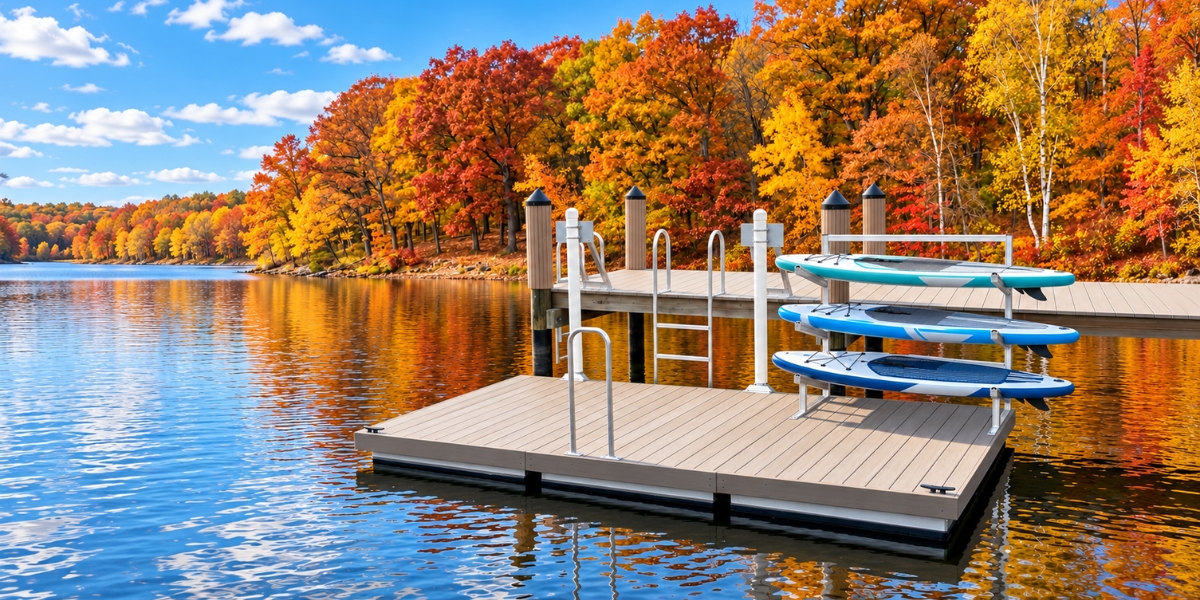
- Kayak and paddleboard launches to attract recreational users
- Work platforms for maintenance or construction access
- Event spaces for waterfront gatherings or rentals
How These Features Increase Revenue
These additions allow you to earn income in multiple ways:
- Charging for services like fuel or equipment access
- Attracting new types of customers
- Increasing foot traffic and overall marina activity
- Creating opportunities for partnerships or events
A flexible marina dock design makes it easier to integrate these features without disrupting your existing layout.
Trends Shaping Marina Dock Design
The marina industry is changing quickly, and staying up to date with new trends can make a big difference in how well your marina performs. A modern approach to marina dock design is no longer just about placing docks in the water. It is about creating a flexible, efficient, and user friendly environment that can adapt over time.
Understanding these trends helps marina owners make better decisions, avoid costly mistakes, and stay competitive in a growing market.
More Flexible Dock Systems
One of the biggest shifts in marina dock design is the move toward modular and floating dock systems. Traditional fixed docks can be limiting because they are harder to adjust once installed. In contrast, modular systems allow you to change your layout as needed.
Flexible dock systems offer several advantages:
- You can reconfigure your layout as demand changes
- Sections can be added or removed without major construction
- Floating docks adjust naturally to changing water levels
- Repairs are often quicker and less disruptive
This flexibility is especially important as boating trends evolve. For example, if demand shifts from large yachts to smaller recreational boats, a modular system makes it easier to adjust your slip sizes.
Greater Focus on Accessibility
Accessibility is becoming a key part of marina planning. More boaters are looking for marinas that are easy to navigate, safe to use, and inclusive for people of all abilities.
Modern marina dock design now includes:
- Smooth, stable walking surfaces
- Gangways with manageable slopes
- Wider pathways for easier movement
- Accessible slips that support safe boarding
Improving accessibility does more than meet guidelines. It opens your marina to a wider group of users, including families, older adults, and organizations hosting events.
Increased Demand for Smaller Boats
Boating trends are shifting. Many marinas are seeing growing demand for smaller boats, personal watercraft, and day use vessels. These boats often require less space but higher turnover.
This trend impacts marina dock design in several ways:
- More need for smaller, flexible slips
- Increased demand for quick access areas
- Greater use of launch points for kayaks and paddleboards
- Higher traffic in certain zones during peak times
If your marina is still focused mainly on large slips, you may be missing opportunities to serve this growing segment.
Use of Technology for Monitoring and Management
Technology is becoming more common in marina operations. While docks themselves are physical structures, digital tools are helping marina owners manage them more effectively.
Examples of technology used in marina dock design and operations include:
- Occupancy tracking systems
- Smart sensors for water levels and dock conditions
- Reservation and booking platforms
- Security and monitoring systems
These tools provide valuable insights into how your marina is being used. With better data, you can make informed decisions about layout changes, pricing, and future upgrades.
Best Practices for Long Term Success
Choose Durable Materials
Strong materials reduce maintenance and extend the life of your dock system.
Plan for Future Growth
Even if you do not need more slips now, design your marina so it can expand later.
Work with Experienced Designers
Dock design requires knowledge of engineering, water conditions, and user behavior. Working with the right team helps avoid costly mistakes.
Frequently Asked Questions About Marina Dock Design
What is marina dock design?
Marina dock design is the way docks, slips, and walkways are arranged. It affects how many boats you can serve and how easy your marina is to use.
Why is marina slip layout important?
A strong marina slip layout increases capacity while keeping the marina safe and easy to navigate.
How often should layouts be reviewed?
Most marinas should review their layout every 5 to 10 years to stay aligned with changing needs.
Can floating docks improve marina dock design?
Yes. Floating docks offer flexibility and can be adjusted as demand changes.
What should I consider when planning marina slip layout?
You should look at boat sizes, traffic flow, water conditions, accessibility, and future growth.
Get Started with Smarter Marina Dock Design
Improving your marina is not just about adding more slips. It is about using your space in a smarter way. A well planned marina dock design and thoughtful marina slip layout can increase revenue, improve customer satisfaction, and support long term success.
If you are thinking about upgrading your marina or building a new one, consider working with a team that understands how docks perform in real conditions. AccuDock offers modular floating dock systems that are built to adapt and last.
To learn more about improving your marina layout, explore your options or contact us for more information.

AccuDock is a global leader in the design and manufacturing of Floating Docks
CALL 954.785.7557 OR EMAIL [email protected] FOR MORE INFORMATION


