

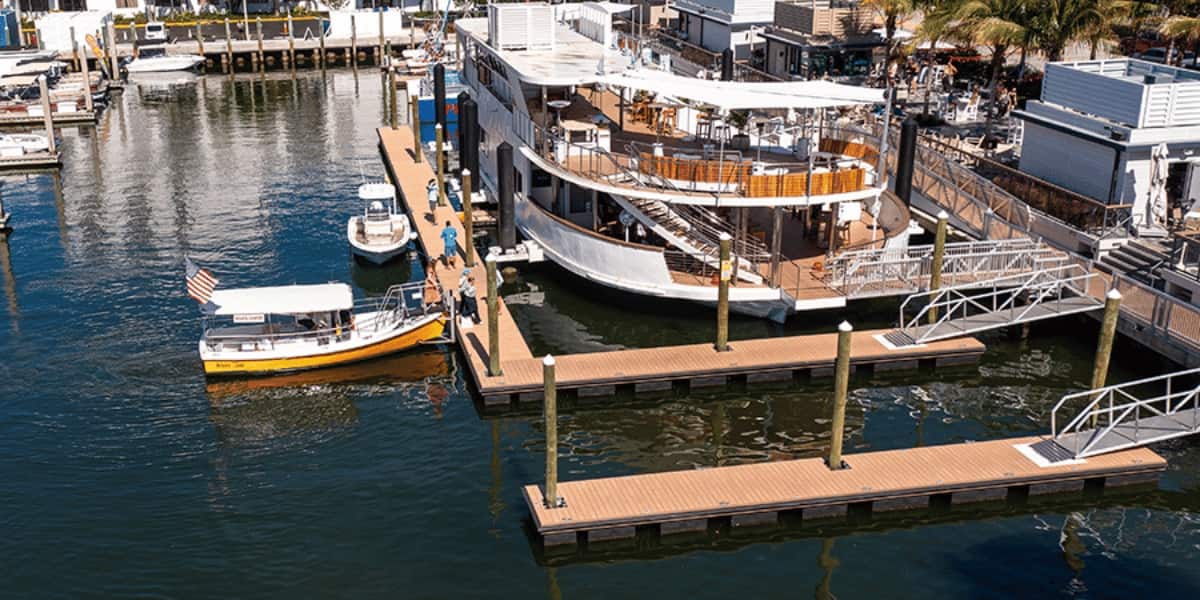
HDPE Floating Docks vs Fixed Options for Long Term Performance
If you’re planning to build a dock, one of the first big decisions you’ll face is this: should you go with a floating dock or a fixed dock?
If you care about durability, flexibility, and long-term value, HDPE floating docks are likely already on your radar. But how do they really compare to traditional fixed docks over time?
In this guide, we’ll break it down in simple terms. You’ll learn how HDPE floating docks perform compared to fixed docks when it comes to materials, maintenance, water levels, storms, and long-term use. Whether you’re a homeowner, marina operator, contractor, or government buyer, this overview will help you make a smarter decision.
What’s the Difference Between Floating and Fixed Docks?
If you’re new to docks, it’s easy to think they’re all basically the same: just a platform that gets you out over the water. But the truth is, floating docks and fixed docks work in totally different ways, and that difference affects everything: safety, maintenance, lifespan, cost over time, and how the dock performs in changing conditions.
Below is a clear breakdown of what each one is, how it works, and why it matters, especially if you’re comparing long-term performance.
Floating Dock (most common for changing water levels)
- Sits on top of the water and moves up and down
- Held in place with anchoring systems or guide piles
- Great for tide changes, lake level changes, and flood-prone areas
- Often modular and customizable
Fixed Dock (most common for calm, stable water)
- Built on pilings driven into the bottom
- Stays at a set height all the time
- Can feel “rock solid,” especially in calm water
- More permanent and harder to modify later
What Is a Floating Dock?
A floating dock sits right on the water’s surface. It’s supported by floats underneath, so it stays buoyant: kind of like a very sturdy, purpose-built raft. The big benefit is simple:
It rises and falls with the water level.
So if the tide goes in and out, or your lake level changes over the seasons, the dock stays at the same “working height” relative to the water.
How a Floating Dock Stays in Place
Even though it floats, it doesn’t just drift away. Floating docks are held in position using systems like:
- Guide piles: vertical posts that the dock slides along as the water level changes
- Anchors: secured to the bottom to keep the dock from shifting
- Mooring systems: cables or hardware designed to manage movement safely
The goal is to keep the dock stable while still allowing it to move up and down.
Why Many Modern Floating Docks Are Modular
Most modern HDPE floating docks are modular, which means they’re built in sections (like building blocks) that connect together. This is a huge advantage for long-term use because you can:
- Start with a smaller layout and expand later
- Add a kayak launch, swim platform, or slip
- Reconfigure the shape if your needs change
- Replace a section without rebuilding the entire dock
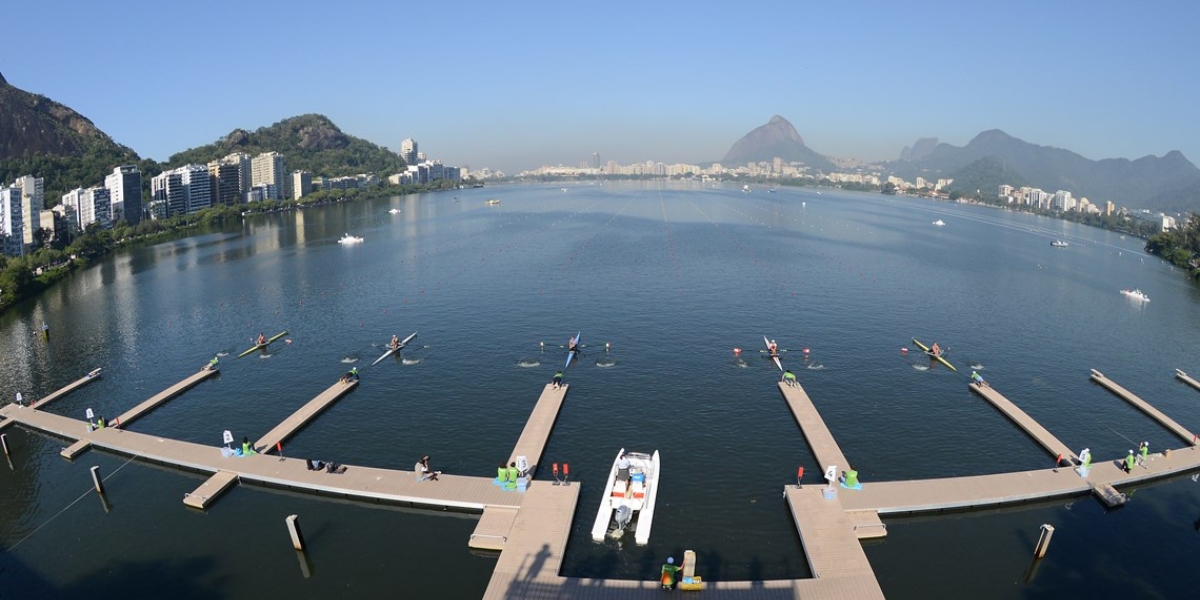
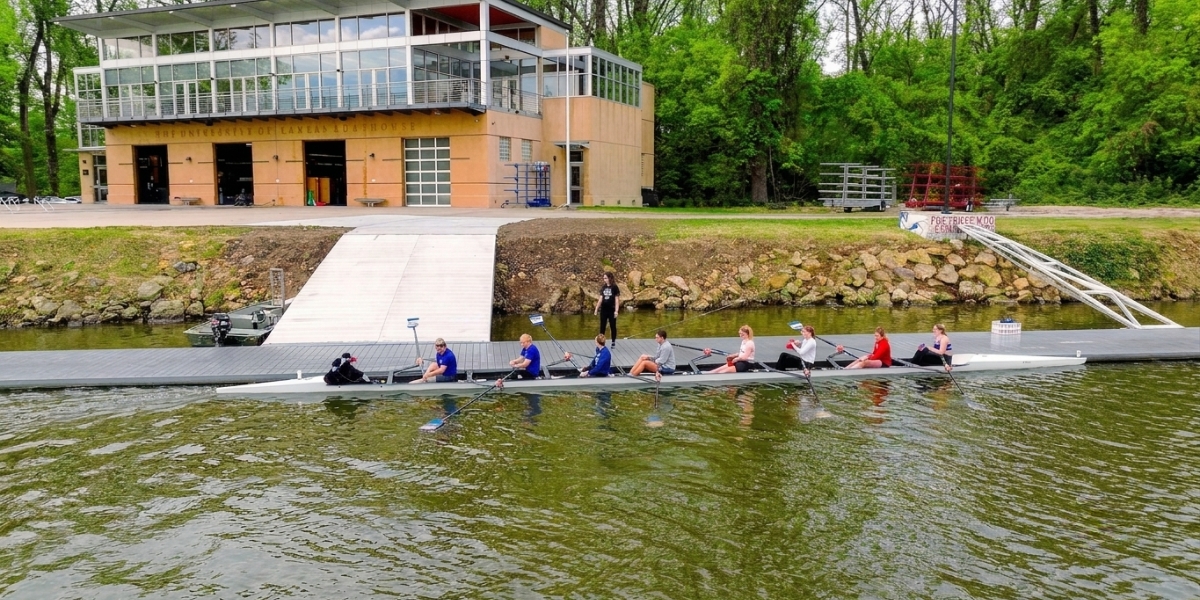
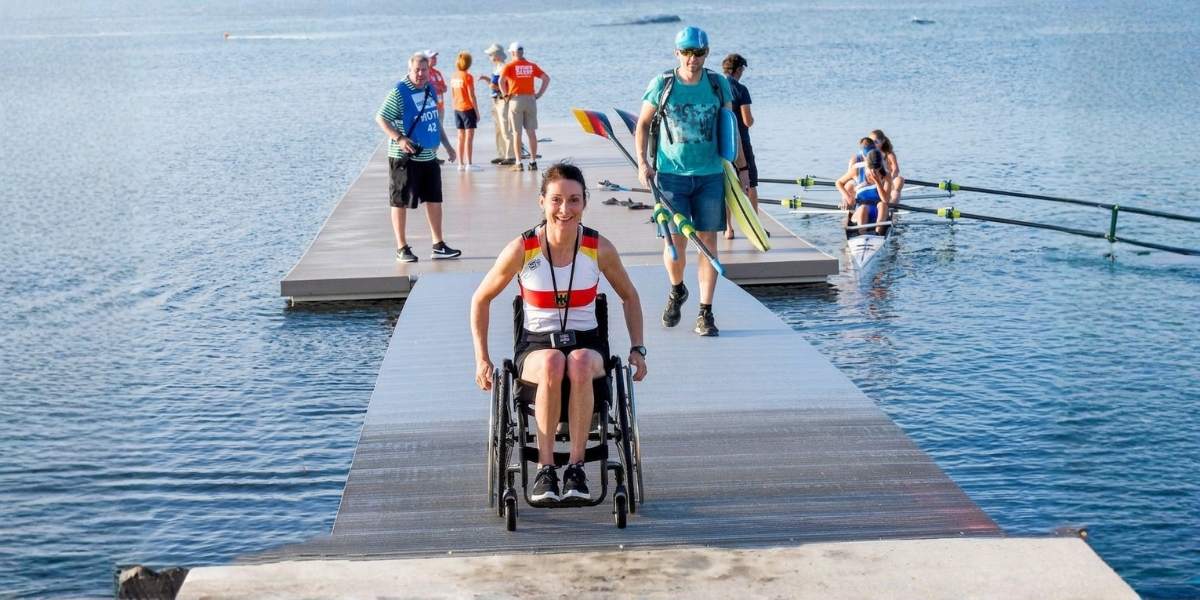
That flexibility is a big reason floating docks are popular for homeowners, marinas, rowing/kayak facilities, and public access areas.
Where Floating Docks Usually Make the Most Sense
Floating docks are especially useful when water conditions are unpredictable, such as:
- Tidal coastal areas
- Lakes with seasonal water level drops
- Rivers where water height changes after rain
- Places that flood occasionally
If you’ve ever seen a fixed dock sitting way above the water during a dry season, you already understand why floating docks can be a smarter fit.
What Is a Fixed Dock?
A fixed dock (also called a stationary dock) is built like a permanent structure. It stands above the water on pilings that are driven into the lakebed or seabed.
The dock does not move with the water.
The platform stays at one set height year-round.
What Fixed Docks Are Usually Made From
Fixed docks can be built in different ways, but they typically use materials like:
- Wood framing (common for traditional docks)
- Concrete decking (durable but heavy and can crack over time)
- Steel supports (strong but can corrode in saltwater)
- Timber or concrete pilings (the “legs” that hold the dock up)
Why Fixed Docks Feel So “Solid”
A fixed dock is physically locked into place, so in calm water it often feels extremely stable underfoot. Some people love that traditional, sturdy feel, especially when the dock is built well and the water level stays fairly consistent.
The Big Challenge: Water Level Changes
The main downside is also simple:
Fixed docks don’t adjust.
So if your water level changes, the dock height might become a problem:
- When water drops, the dock can end up too high above the surface
- When water rises, waves and surge can hit the structure harder
- During storms, the dock may take more force because it can’t “move with” the water
This is why fixed docks can perform beautifully in stable conditions, but struggle in areas with big seasonal changes, tides, or frequent storms.
Why This Difference Matters In The Long Term
The biggest long-term difference isn’t just “one floats and one doesn’t.” It’s what that means over the years.
1. Water Levels and Day-to-Day Use
- Floating dock: stays usable even when water levels change
- Fixed dock: can become too high, too low, or less safe when levels shift
2. Maintenance and Repairs
- Floating docks: modular parts can often be replaced section by section
- Fixed docks: repairs can involve structural work, pilings, and major labor
3. Flexibility Over Time
- Floating docks: easier to expand, reconfigure, and upgrade
- Fixed docks: changes often require new pilings, permits, and construction
4. How They Handle Storm Energy
- Floating docks: can move with wave action (when designed correctly)
- Fixed docks: take force more directly through pilings and structure
Why Materials Matter for Long-Term Performance
When you invest in a dock, you’re not just buying a platform over the water. You’re buying years (or decades) of use. That’s why materials matter so much. The wrong materials can lead to constant repairs, rough surfaces, loose hardware, and big replacement costs sooner than you expected. The right materials can mean a dock that stays strong, safe, and good-looking with far less stress.
A dock lives in one of the toughest environments there is:
- Full sun (UV rays that break down many materials)
- Water exposure every day (freshwater or saltwater)
- Humidity and heat
- Storms, waves, and wind
- Marine growth (algae, barnacles, and slime)
- Bumps and impacts (boats, coolers, carts, people, equipment)
Over time, all of that adds up. So the question becomes: Which materials hold up best when the dock has to perform year after year?
How HDPE Performs Over Time
HDPE stands for High-Density Polyethylene. It’s a tough plastic used in many demanding industries because it handles the outdoors extremely well. For dock systems, HDPE is popular because it doesn’t break down the way wood and metal often do.
That’s one reason HDPE floating docks have become a go-to option for homeowners, marinas, parks, and commercial operations that want long-term performance.
Why HDPE Is a Strong Dock Material
Here’s what HDPE is known for in real-world dock conditions:
- Resists UV damage from the sun: Sunlight destroys many materials over time. HDPE is made to handle long-term UV exposure, which helps it last longer outdoors.
- Does not rot or absorb water: Wood can swell, warp, rot, or get soft. HDPE doesn’t soak up water, so it doesn’t break down in the same way.
- Will not rust or corrode: Metal parts can corrode, especially near saltwater. HDPE itself doesn’t rust, which can help keep the overall system more reliable.
- Handles saltwater well: Salt air and salt spray are brutal on traditional dock materials. HDPE holds up well in these harsh coastal conditions.
- Stands up to impact: Docks get hit: by boats, waves, floating debris, and everyday use. HDPE is known for being durable and impact-resistant.
HDPE vs Wood vs Metal
If you’ve owned a dock before, you’ve probably seen these issues:
Wood docks often deal with:
- Rot, splintering, and soft spots
- Warping and cracking from sun and drying
- Frequent staining/sealing
- Fasteners loosening as boards shrink and expand
Metal docks often deal with:
- Rust or corrosion (especially near saltwater)
- Hot surfaces in direct sun
- Ongoing coating/paint maintenance
HDPE-based systems are valued because:
- No rot and no splinters
- Strong resistance to weather and water exposure
- Less “constant upkeep” compared to traditional materials
Unlike wood, HDPE won’t splinter or crack from drying out. Unlike steel, HDPE doesn’t rust. And unlike untreated materials, it won’t slowly break down just from being wet all the time.
For waterfront properties exposed to heat, humidity, storms, and salt air, this durability can be a major advantage, especially when you’re thinking long-term.
Common Long-Term Problems That Better Materials Help Prevent
Even if two docks look similar on day one, time reveals the difference. Better materials can help reduce problems like:
- Soft or unsafe walking surfaces
- Loose boards and wobbly sections
- Unexpected repairs after storms
- Costly replacements sooner than planned
- Constant maintenance weekends
That’s why so many buyers compare material choices early, before they commit to a dock style or layout.
The Importance of HDPE Floats in Dock Stability
If the deck surface is what you see, flotation is what makes a floating dock work. The flotation system is the foundation of any floating dock. That’s where HDPE floats come in.
How HDPE Floats Support Long-Term Performance
High-quality HDPE floats are designed to handle years of sun, water exposure, and repeated loading. In plain terms, they help the dock stay level, stable, and predictable under real use.
High-quality HDPE floats are often:
- UV-resistant (so sun exposure doesn’t weaken them quickly)
- Strong and impact-resistant (important in busy marinas or rough water)
- Foam-filled (commonly used to reduce the risk of water intrusion and help maintain buoyancy)
- Designed to distribute weight evenly (this is huge for stability)
Here’s the key idea: stability comes from how flotation is built and how it’s placed. In a well-engineered system, floats aren’t “random add-ons.” They’re positioned to support the dock evenly, reduce bounce, and prevent that annoying “tilt” feeling when people walk across it.
And yes, this matters even more for commercial and public projects. Marinas, rowing clubs, and government facilities often need docks that can handle:
- Groups of people standing in one area
- Carts rolling over the surface
- Gear, fuel, or equipment loads
- Constant daily use
If flotation is undersized or poorly designed, you can end up with a dock that feels unstable, sits unevenly, or becomes less predictable over time.
What Makes a Floating Dock Feel “Stable”?
People often describe a good dock as feeling “solid.” That usually comes down to a few things:
- Even buoyancy (so one side doesn’t dip when weight shifts)
- Proper freeboard (how high the dock sits above the water)
- Smart float spacing (balanced support across the whole dock)
- Strong frame connections (reduces twisting and flex)
- Correct anchoring or guide system (controls movement)
In other words, stability isn’t just one feature. It’s the result of the entire system working together.
This is also why HDPE floating docks can feel more confident underfoot when they’re engineered correctly. Good flotation plus strong design equals a dock that performs consistently over the long run.
Not All Floats Are Built the Same, And It Shows Over Time
It’s easy to assume “a float is a float,” but that’s not true. Lower-quality flotation systems may use:
- Thinner shells that can wear down faster
- Poorly sealed designs
- Flotation that isn’t sized for the real load
- Layouts that don’t distribute weight evenly
Over time, that can lead to a dock that feels less stable, needs more adjustments, or doesn’t perform the way you expected.
That’s why understanding the quality of HDPE floats is just as important as the deck surface itself.
Storms and Structural Stress
If you live on the water (or manage a marina), you already know this truth: docks don’t just “sit there.” They take a beating.
Over time, a dock can weaken, especially if the dock is built in a way that fights the movement of the water instead of working with it.
Let’s break down how storms and stress affect fixed docks vs. HDPE floating docks in a simple, real-world way.
Fixed Dock Stress: Why Rigid Structures Can Take More Damage Over Time
A fixed dock is held up by pilings driven into the seabed or lakebed. The platform is rigid and stays at one height, which can feel super solid in calm conditions.
But during storms, that rigidity becomes a problem.
Why? Because the force has nowhere to go.
When waves and storm surge hit a fixed dock, the energy often transfers straight into:
- the pilings
- the connections and brackets
- the deck framing
- the fasteners
That repeated stress, especially during storms, can lead to long-term wear and expensive repairs.
Common long-term issues fixed docks face in storms
- Pilings can shift due to erosion
Stormwater and wave action can wash away sand and sediment around pilings. Over time, that can lead to:
- pilings becoming loose or leaning
- the dock feeling uneven
- added stress on the structure as it “pulls” on hardware
- Cracking from impact
Floating debris is one of the most overlooked problems. During storms, debris can slam into pilings, cross braces, and dock edges.
That can cause:
- cracked wood members
- bent brackets
- broken bolts or fasteners
- damaged decking
- Rot (if wood is involved)
Wood and constant moisture are not best friends, especially after storm flooding.
After storms, fixed docks can stay wet for long periods, which increases the risk of:
- rot in framing
- soft deck boards
- weakened structural areas around fasteners
- Corrosion (if steel is involved)
In saltwater or brackish environments, storm conditions can speed up corrosion, especially when metal parts stay wet and salty.
Over time, corrosion can weaken:
- bolts and connectors
- brackets and plates
- ladders and handrails
- structural steel components
Storm surge adds a second layer of pressure
Storm surge raises water levels quickly, and that can create two big issues for fixed docks:
- The dock may get partially submerged, pushing water pressure into areas not designed for it.
- Waves on top of surge can slam the dock from underneath, especially if the dock has limited clearance.
Fixed docks can also get damaged when surge pushes boats or other structures into the dock, because the dock can’t “give” very much.
Floating Dock Movement: Why “Flexing” Can Reduce Structural Fatigue
Here’s a key idea that many people don’t realize:
Movement isn’t always bad.
In many storm conditions, controlled movement is actually what helps a dock survive longer.
Unlike fixed docks, HDPE floating docks move with the water instead of holding a rigid position against it.
What does that mean in real life?
When waves lift and drop the water surface, a floating dock:
- rises with the wave
- settles after the wave
- shifts slightly instead of resisting all the force
That movement helps reduce the “snap” stress that can crack framing, loosen fasteners, or strain pilings in rigid systems.
Why properly engineered floating docks often handle repeated stress better
This doesn’t mean floating docks can’t be damaged. They absolutely can.
But properly engineered HDPE floating docks are designed to handle motion without falling apart because they:
- Utilize a specialized flotation system for consistent support.
- Rise and fall naturally with changing water levels.
- Distribute weight loads evenly across modular sections.
In simple terms, a floating dock is often more like a “shock absorber,” while a fixed dock is more like a “wall.”
How HDPE Helps in Storm Conditions
HDPE (high-density polyethylene) is popular in marine environments for a reason: it handles harsh conditions knowing it will be exposed to water, sun, impact, and movement.
Here are a few storm-related advantages of HDPE-based systems:
- No rust and no rot (major long-term benefit)
- Strong impact resistance (helps with bumps and collisions)
- UV resistance (less breakdown from sun exposure between storms)
- Consistent performance in wet conditions (it doesn’t absorb water)
And when the dock uses quality flotation like foam-filled, UV-stable HDPE floats, it can keep buoyancy and stability longer, even in rough conditions.
Important Reality Check: Floating Docks Aren’t “Storm-Proof”
It’s worth saying clearly:
Even the best dock can be damaged in extreme weather.
So the goal isn’t “storm-proof.” The goal is storm-smart.
A dock that performs well over the long term usually has:
- the right design for the site
- proper anchoring or piling guidance
- strong connections
- smart layout choices that reduce wave exposure
- materials that don’t break down quickly (like HDPE)
Maintenance: What Will It Cost You Over Time?
Long-term performance isn’t just about strength. It’s also about how much time and money you’ll spend maintaining your dock.
Fixed Dock Maintenance
Fixed docks often require:
- Staining or sealing (for wood)
- Replacing damaged boards
- Inspecting and repairing pilings
- Fixing corrosion
- Addressing concrete cracks
In coastal environments, salt can speed up wear and tear.
HDPE Floating Dock Maintenance
With HDPE floating docks, maintenance is typically lower because:
- HDPE does not rot
- It resists UV damage
- It won’t rust
- Individual sections can be replaced
For commercial users, lower maintenance means less downtime and fewer unexpected costs.
Expansion and Flexibility
Your needs may change over time.
- Maybe you add a larger boat.
- Maybe your marina grows.
- Maybe your park needs ADA access.
- Maybe you expand a rowing program.
Fixed Dock Expansion
Expanding a fixed dock usually requires:
- Driving new pilings
- Engineering approval
- Permitting
- Major construction work
This can be expensive and disruptive.
Modular Floating Dock Systems
Many HDPE floating docks are modular. That means you can:
- Add new sections
- Change layouts
- Expand platforms
- Upgrade components
For growing operations, that flexibility is a huge long-term advantage.
How Long Will Each Option Last?
Lifespan depends on environment and maintenance.
Fixed Docks
- Wood docks may last 10–25 years depending on care.
- Concrete may last longer but can crack.
- Steel may corrode over time.
Pilings are often the weak point in fixed systems.
HDPE Floating Docks
High-quality HDPE floating docks are built for long service life. Because HDPE resists environmental damage, these systems often maintain structural integrity for decades.
Another advantage? If one section is damaged, you can replace just that section instead of rebuilding the entire dock.
So, Which Is Better for Long-Term Performance?
Here’s a simple comparison.
Floating Dock Advantages
- Adjusts to changing water levels
- Lower structural stress over time
- Reduced maintenance
- Easier expansion
- Modular replacement
Fixed Dock Advantages
- Traditional look
- No visible flotation
- May work well in calm, stable water conditions
For waterfront areas with fluctuating water, harsh weather, or long-term expansion plans, HDPE floating docks often provide better overall lifecycle value.
Who Benefits Most from HDPE Floating Docks?
Because of their durability and flexibility, HDPE floating docks are commonly chosen by:
- Residential waterfront homeowners
- Marina operators
- Government agencies
- Parks and recreation departments
- Commercial marine facilities
- Rowing and kayaking organizations
These groups usually value:
- Long-term reliability
- Custom design
- ADA compliance options
- American-made quality
- Lower maintenance costs
Plan for the Future of Your Fixed or HDPE Floating Docks
When choosing a dock, think beyond today. Ask yourself:
- Will water levels change?
- Will I expand in the future?
- How much maintenance do I want to handle?
- How long do I want this dock to last?
While fixed docks have been used for many years, modern engineering and materials have made HDPE floating docks a smart solution for long-term performance.
If you’re exploring floating dock options and want a durable, modular system built to last, now is the time to learn more. Visit our floating dock solutions page or contact us to discuss your project and see how a high-quality HDPE system can support your waterfront for decades to come.
AccuDock is a global leader in the design and manufacturing of Floating Docks
CALL 954.785.7557 OR EMAIL [email protected] FOR MORE INFORMATION


