

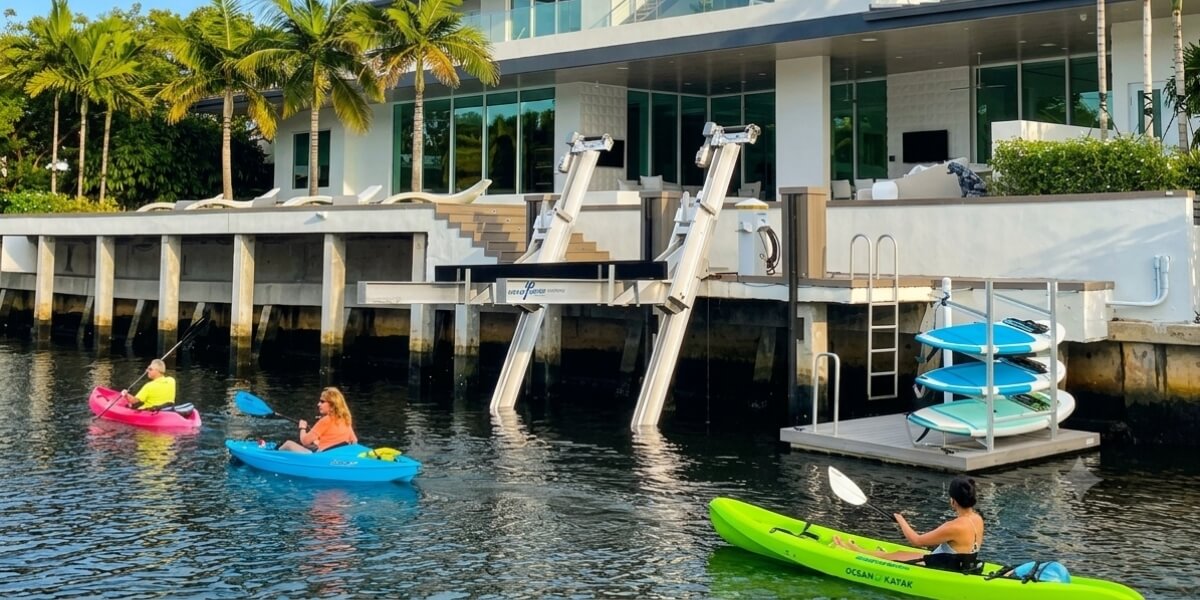
Summer Fitness on the Water: Kayaking Tips for Beginners and Pros
Kayaking for beginners is one of the most approachable ways to enjoy summer fitness on the water. It combines fresh air, low-impact movement, core strength, balance, and time outdoors without requiring a full gym setup or years of training. Whether you’re paddling across a calm lake, exploring a slow river, launching from a marina, or building a more active waterfront routine at home, kayaking can meet you where you are.
For new paddlers, the biggest challenge is often knowing where to start. What kind of kayak should you use? How do you launch safely? What should you bring? How do you turn a casual paddle into a real workout? More experienced paddlers may have a different goal, such as improving endurance, cleaning up their stroke, or finding a dock setup that makes launching easier.
That’s where thoughtful planning matters. A safe and comfortable paddling experience starts before you get on the water. It includes the right gear, a stable launch point, smart pacing, and a realistic view of your skill level. For homeowners, parks, camps, marinas, and waterfront facilities, the dock setup also plays a major role. A low-profile, stable launch can make kayaking easier for first-time paddlers and more efficient for frequent users.
Below, we’ll walk through practical kayaking tips for beginners and pros, from fitness basics and safety habits to launch design and dock features that can support a better day on the water.
Why Kayaking Works So Well for Summer Fitness
Kayaking is a strong summer fitness choice because it works several parts of the body at once while staying relatively gentle on the joints. Your shoulders, arms, back, and core all help power the paddle stroke. Your legs and hips help stabilize your body as the kayak moves with the water. Even at a relaxed pace, paddling can support aerobic activity and build better body control over time.
The CDC’s adult physical activity guidelines recommend 150 minutes of moderate-intensity aerobic activity each week, plus at least two days of muscle-strengthening activity. Kayaking can help many adults work toward that weekly movement goal when done at a steady, safe pace.
Unlike many indoor workouts, kayaking also gives you a change of scenery. A quiet morning paddle can feel peaceful, while a longer route can feel like a real endurance session. For families, it can become a shared summer activity. For waterfront property owners, it can turn a dock into a daily fitness starting point. For marinas and parks, it can make the waterfront more welcoming to paddlers of different skill levels.
AccuDock supports this kind of active waterfront use with kayak and paddle sport dock systems designed for stable, convenient access. A well-planned launch area can reduce awkward entry points and make paddling feel less intimidating.
Kayaking for Beginners: Start With the Right Mindset
Kayaking for beginners should be about control, comfort, and confidence before speed or distance. It’s better to start with a short, calm route than to take on a long paddle in wind, current, or heavy boat traffic. Good early experiences help new paddlers build skills without feeling rushed.
Choose calm water first
Lakes, protected coves, slow rivers, and quiet marina areas are usually better starting points than open water. Calm conditions make it easier to learn how the kayak responds to your paddle strokes. You’ll also have more time to practice turning, stopping, and backing up.
Avoid your first few outings on windy days. Wind can push a kayak off course faster than many beginners expect. Current can also make a route harder on the return trip, especially if you paddle downstream first and have to work harder coming back.
Use a kayak that matches your comfort level
A wider recreational kayak is often easier for beginners than a narrow touring kayak. Sit-on-top kayaks are popular for warm weather because they’re simple to enter and exit. Sit-inside kayaks can offer more coverage from splashing, but some beginners may feel less comfortable in them at first.
For more guidance on choosing equipment, AccuDock’s guide to the best kayak options for new paddlers can help you compare common features in plain terms.
Keep your first route short
A 20 to 45 minute paddle is plenty for a first session. You can always add more time later. The goal is to get familiar with the kayak, your paddle, and your launch area without wearing yourself out.
Short outings also make it easier to notice what needs improvement. Maybe your seat needs adjustment. Maybe your paddle is too long. Maybe your launch point feels unstable. Those small details matter because they affect comfort and safety.
Kayaking Tips for Better Form, Control, and Comfort
Good technique makes paddling easier. It also lowers strain on your shoulders and arms. These kayaking tips can help beginners start with better habits and give experienced paddlers a useful refresher.
Sit tall and stay relaxed
Posture matters more than most people think. Sit tall, keep your shoulders relaxed, and avoid leaning too far back into the seat. Your torso should help with each stroke. If your arms are doing all the work, you’ll get tired faster.
Think of your paddle stroke as a full-body movement. Your core rotates slightly as the blade enters and exits the water. Your arms guide the paddle, but your torso helps create power.
Hold the paddle correctly
Place your hands a little wider than shoulder-width apart. Keep your knuckles lined up with the paddle blade. Try not to grip too tightly. A tight grip can tire your hands and forearms.
A basic forward stroke has three parts:
- Reach forward and place the blade in the water near your feet.
- Pull the blade back alongside the kayak using your torso and upper body.
- Remove the blade near your hip and repeat on the other side.
Keep the motion steady. Splashing too much often means the blade angle or stroke path needs work.
Practice stopping and turning
Beginners often focus on moving forward, but stopping and turning are just as important. To stop, use reverse strokes on both sides. To turn, paddle more strongly on one side or use a sweep stroke, which moves the paddle in a wide arc from front to back.
Practice these skills near shore in calm water before heading farther out. A few minutes of practice can make the rest of your paddle feel much easier.
Building a Beginner-Friendly Kayaking Workout
Kayaking for beginners can start as a casual activity and slowly become a fitness routine. You don’t need to paddle hard the entire time. In fact, interval-style paddling is often more useful and more enjoyable.
Here’s a simple beginner structure:
| Workout Phase | Time | What to Do | Goal |
| Warmup | 5 minutes | Paddle slowly with easy strokes | Loosen shoulders and settle balance |
| Steady paddle | 10 minutes | Keep a relaxed, even pace | Build comfort and rhythm |
| Short intervals | 5 to 8 minutes | Paddle faster for 30 seconds, then easy for 60 seconds | Add cardio without overdoing it |
| Skill practice | 5 minutes | Turn, stop, back up, and dock slowly | Improve control |
| Cooldown | 5 minutes | Paddle slowly back to the launch | Lower effort before exiting |
As you build endurance, you can extend the steady paddle section or add a few more intervals. More experienced paddlers can increase speed, distance, or route difficulty. The key is to change one factor at a time. Adding distance, speed, and rougher water all at once can lead to fatigue or poor decision-making.
For more water-based exercise ideas, AccuDock’s list of water sports for a full-body workout can help you compare kayaking with other summer fitness options.
Safety Habits Every Paddler Should Follow
Strong kayaking tips always include safety. Even confident swimmers need to treat paddling with respect. Conditions can change quickly, and the right safety habits protect beginners and pros alike.
The U.S. Coast Guard reported that drowning accounted for 75 percent of recreational boating deaths in 2023, and 87 percent of those drowning victims were not wearing life jackets. The U.S. Coast Guard’s recreational boating safety statistics are a clear reminder that life jackets matter on every outing.
Wear a properly fitted life jacket
A U.S. Coast Guard-approved life jacket should fit snugly without restricting breathing or paddle movement. It should not ride up over your chin when pulled at the shoulders. Water Safety USA states that properly fitted life jackets are a key life-saving strategy for boating, paddling, and towed water sports.
Check weather and water conditions
Before launching, check wind, storms, tides, current, and heat index. Summer weather can change fast, especially in coastal areas. Lightning, strong wind, and fast-moving storms are all good reasons to postpone a paddle.
Bring water and sun protection, especially during midday trips. A hat, sunglasses with a strap, sunscreen, and lightweight clothing can make the experience more comfortable.
Paddle with a plan
Tell someone where you’re going and when you expect to return. Bring a charged phone in a waterproof case, a whistle, and basic first aid supplies. Stay close to shore when you’re new, and avoid crossing busy boating channels unless you have the skill and visibility to do so safely.
For more guidance on launch-area safety, AccuDock’s article on safe paddling from a kayak dock offers helpful points for both private and public waterfronts.
Launching Matters More Than Beginners Realize
A great paddle can start badly if the launch point is unstable, too high, too slippery, or hard to reach. Many beginners struggle less with paddling than with getting in and out of the kayak. That’s why launch design deserves real attention.
A good launch area should help paddlers:
- Enter and exit without awkward climbing.
- Keep the kayak steady during transfers.
- Stage paddles, bags, and safety gear within reach.
- Move away from other boats, swimmers, or heavy traffic.
- Return safely even when tired.
AccuDock’s ADA kayak and canoe launch options are designed to support easier access for a wider range of users. For parks, camps, and community waterfronts, accessible launch planning can make kayaking more welcoming.
Homeowners can also benefit from a better launch setup. A stable floating dock can adjust with changing water levels, which is especially useful on lakes, rivers, and coastal properties. If you’re comparing launch styles, AccuDock’s guide to a floating kayak launch versus a traditional launch explains how different setups affect comfort and use.
Pro-Level Kayaking Tips for Stronger Paddling
Experienced paddlers often want more than a casual float. They may want better speed, longer routes, cleaner technique, or a more challenging workout. The right habits can help without adding unnecessary risk.
Improve stroke efficiency
A stronger stroke doesn’t always mean pulling harder. It often means paddling cleaner. Watch for wasted movement, uneven strokes, and overreaching. Keep the blade close enough to the kayak to move straight, but not so close that you hit the side.
Experienced paddlers can also practice cadence. Try holding a steady stroke rate for several minutes, then increase pace for short bursts. This builds control and stamina without turning every outing into a race.
Add route variety
Once you’re comfortable, vary your routes. Paddle into a light headwind first, then return with the wind behind you. Explore longer shoreline routes. Add gentle turns, narrow passages, or distance goals.
Avoid jumping too quickly into rough water, fast current, or open crossings. Skill grows with steady practice. Smart route choices help you improve while staying within your limits.
Train off the water too
Core strength, hip mobility, shoulder stability, and balance work can all support better kayaking. Simple exercises like planks, rows, bird dogs, and bodyweight squats can make paddling feel better. Stretching your chest, back, hips, and forearms can also help after longer sessions.
Choosing the Right Dock Setup for Kayaking
The best dock for kayaking depends on who will use it, how often it will be used, and what type of waterfront you have. A private lake home has different needs than a busy marina or public park. Still, the main goals are usually the same: stability, safe access, durability, and easy use.
Residential waterfronts
For homeowners, a kayak-friendly dock can make daily paddling more realistic. If launching is a hassle, kayaks often sit unused. A stable floating dock with storage options can make quick morning or evening paddles much easier.
AccuDock’s residential dock systems can be designed around how your family uses the water, whether that includes kayaking, swimming, fishing, or entertaining.
Marinas, camps, and parks
Public and commercial settings need to think about traffic flow, user skill levels, safety signage, and long-term wear. A marina may need a launch that keeps paddlers away from larger boats. A camp may need a layout that helps staff supervise kids. A park may need accessibility features and room for groups.
For camp and park settings, AccuDock’s floating dock options for camps and parks can support swimming, paddling, and mixed waterfront programming.
Storage and staging
Kayak storage also affects safety and convenience. When kayaks, paddles, and life jackets are stored neatly, users are less likely to trip, drag gear across the dock, or block walkways. AccuDock’s article on kayak storage on floating docks offers ideas for keeping gear organized near the launch area.
Common Beginner Mistakes to Avoid
Even simple kayaking trips can become frustrating when new paddlers skip basic planning. These mistakes are common, but they’re easy to fix.
Starting in hard conditions
Wind, current, waves, and boat wakes can make kayaking more difficult. Beginners should choose calm water and mild weather until they understand how the kayak handles.
Bringing too much gear
Extra gear can clutter the kayak and make it feel less stable. Bring what you need, but keep it simple. Water, sun protection, a phone in a waterproof case, a whistle, and basic safety items are a good start.
Ignoring launch practice
Many new paddlers rush through launching and landing. Take time to practice entering, exiting, and returning to the dock. These moments can be the hardest part of the trip.
Paddling only with the arms
Arm-only paddling leads to quick fatigue. Use torso rotation and steady strokes. Your arms guide the paddle, but your core should help do the work.
Forgetting the return trip
Plan your energy around the full route. If you paddle with the wind or current at the start, the return may be harder. Turn around before you feel tired.
For a deeper look at getting on the water safely, AccuDock’s guide to launching a kayak from a ramp breaks down an important skill that every paddler should understand.
Kayaking With Family, Pets, and Groups
Kayaking can be a great group activity, but group paddles need more planning. Beginners, children, and pets all change the pace of the outing.
Families should choose short routes, calm water, and clear meeting points. Kids should wear properly fitted life jackets at all times. Adults should stay close enough to help if someone drifts, gets tired, or needs to return early.
Paddling with pets also takes preparation. Not every dog enjoys the water, and not every kayak is stable enough for a moving pet. Start with short practice sessions near shore. Use a dog life jacket, bring water, and avoid hot dock surfaces during peak sun. AccuDock’s guide to kayaking with a dog covers pet-specific planning in more detail.
Group leaders at camps, parks, and clubs should also think about dock traffic. A clear launch lane, a separate return area, and a staging space for gear can reduce confusion. For busy waterfronts, a custom dock layout can help keep beginners, experienced paddlers, and staff moving safely.
Where to Take Your Skills Next
Once kayaking for beginners starts to feel comfortable, there are many ways to keep progressing. Some paddlers focus on fitness. Others enjoy fishing, touring, wildlife viewing, or travel. The best next step depends on what makes you want to get back on the water.
Try a new route once you can control your kayak well. Visit a nearby lake or protected bay. Join a guided paddle. Explore early morning outings when water is often calmer. If you want destination ideas, AccuDock’s guide to some of the best places to kayak in the U.S. can help you plan future trips.
You can also build skills by trying related water activities. If you’re deciding between paddling options, AccuDock’s comparison of canoe and kayak differences can help you choose the right craft for your goals.
The main point is to keep learning at a steady pace. Add difficulty slowly, respect the weather, and keep safety gear part of every trip.
Frequently Asked Questions About Kayaking for Beginners
Is kayaking for beginners hard to learn?
Kayaking for beginners is usually easy to start on calm water with the right equipment. Most people can learn basic forward strokes, turning, and stopping in a short session. The harder part is building confidence with launching, landing, wind, and route planning. Start with short outings, use a stable recreational kayak, and practice near shore before taking longer trips.
What are the most important kayaking tips for a first trip?
The most useful kayaking tips for a first trip are to wear a properly fitted life jacket, choose calm water, check the weather, keep the route short, and practice getting in and out of the kayak. Bring water, sun protection, and a phone in a waterproof case. Avoid busy boating areas until you feel comfortable controlling your kayak.
What should I wear when kayaking in summer?
Wear lightweight clothing that can get wet, plus sun protection. A hat, sunglasses with a strap, and water shoes can help. Avoid heavy cotton because it stays wet and can feel uncomfortable. Always wear a properly fitted life jacket. In cooler water, dress for the water temperature, not just the air temperature.
How long should a beginner kayak workout be?
A good beginner kayak workout can be 20 to 45 minutes. Start with five minutes of easy paddling, then paddle at a steady pace before adding a few short intervals. Cool down with slow strokes before returning to the dock. Kayaking for beginners should build skill and comfort first, then distance and speed.
Do I need a special dock for kayaking?
You don’t always need a special dock, but the right setup makes launching safer and easier. A low-profile floating dock or kayak launch can help reduce awkward transfers and keep the kayak steady. This is helpful for homeowners, parks, camps, and marinas that want to support paddlers of different ages and skill levels.
Can kayaking tips help experienced paddlers too?
Yes. Experienced paddlers still benefit from kayaking tips related to stroke form, route planning, safety checks, and dock setup. Small changes can reduce fatigue and improve control. More advanced paddlers can work on pacing, torso rotation, distance goals, and better launch habits.
What is the best way to make kayaking a regular fitness routine?
Make kayaking easy to start. Keep gear organized, choose routes close to home, and set realistic time goals. A convenient launch point can make a big difference. If your dock setup makes entry, exit, and storage easier, you’re more likely to paddle often during the summer.
Make Kayaking for Beginners Safer, Easier, and More Enjoyable
Kayaking for beginners can be simple, fun, and rewarding when you start with the right plan. Choose calm water, wear a life jacket, practice basic strokes, and build distance slowly. As your skills grow, you can add longer routes, faster intervals, and new destinations. The best kayaking tips are the ones that help you feel prepared before you ever leave the dock.
For homeowners, marinas, parks, camps, and commercial waterfronts, the launch setup can shape the entire paddling experience. A stable, well-designed floating dock can make kayaking easier for first-time users and more practical for experienced paddlers. To create a better launch experience for your waterfront, explore AccuDock’s kayak and paddle sport dock systems and start planning a dock that supports safer, more confident time on the water.

AccuDock is a global leader in the design and manufacturing of Floating Docks
CALL 954.785.7557 OR EMAIL [email protected] FOR MORE INFORMATION


