

Lake Dock Ideas for Camps and Parks
When you run a camp or manage a public park, your waterfront is one of your biggest attractions. Kids learn to swim there. Families gather there. Boating, fishing, and kayaking programs all depend on it. That’s why choosing the right lake dock ideas is such an important decision.
The right lake dock can make your waterfront safer, more organized, and more enjoyable for everyone. In this guide, we’ll walk through practical and creative lake dock ideas designed specifically for camps and parks. If you’re in the consideration stage, comparing options and thinking through what will work best, this will help you make a confident decision.
Why Smart Lake Dock Ideas Matter for Camps and Parks
A private residential dock is very different from one used at a camp or public park.
Camps and parks often deal with:
- Large groups of children or families
- High foot traffic
- Seasonal water level changes
- Safety and supervision requirements
- ADA accessibility needs
- Limited maintenance budgets
Because of these challenges, many organizations are choosing modular floating dock systems instead of traditional fixed wood docks.
Floating docks move up and down with the water. They are easier to expand. And they usually require less long-term maintenance. For busy recreational spaces, that flexibility makes a big difference.
Modular Lake Dock Layouts That Grow With You
If you’re building a waterfront for a camp or public park, one of the smartest lake dock ideas is choosing a modular system. Think of it like building blocks: you start with a layout that fits your current programs, and you can expand or rearrange it as your needs change.
For a broader look at system planning, review our guide to floating dock systems for lakes, including shoreline conditions, anchoring, materials, accessories, and seasonal use.
Why modular docks work so well for camps and parks
Modular docks are popular in busy recreation spaces because they’re practical and flexible:
Scalability: Add new sections as your camp grows or your park introduces new programming.
Versatile Layouts: Reconfigure the design to move swim areas, expand fishing spots, or accommodate a kayak launch.
Efficient Repairs: Replace individual sections if damage occurs, rather than tearing out and replacing the entire structure.
Activity Zoning: Create separate areas for different sports so groups can enjoy the water without crowding one another.
That last point is a big deal. Camps and parks often have multiple groups using the waterfront at the same time, and a modular layout helps keep things organized and safer.
Common modular layout options (and what they’re best for)
Here are a few layouts that work especially well in a camp or park setting:
1. Straight dock (simple and efficient)
- Best for: general access, small boats, canoe/kayak staging
- Why it works: easy to supervise and easy to expand later
2. T-shaped dock (more space without crowding)
- Best for: fishing, gathering, loading/unloading
- Why it works: spreads people out and creates a natural “destination” area at the end
3. U-shaped swim area (clear boundaries)
- Best for: swim lessons, supervised open swim
- Why it works: creates a defined swim zone with clear entry/exit points
4. Lifeguard platform (visibility and control)
- Best for: camps and parks with structured swim sessions
- Why it works: gives staff a better view and helps enforce rules
5. Separate work dock (operations without chaos)
- Best for: maintenance, water testing, small repairs, storage
- Why it works: keeps tools and equipment away from guests
A real-world “multi-program” layout example
If you’re running swim lessons, paddling, and fishing on the same day, a modular plan might look like this:
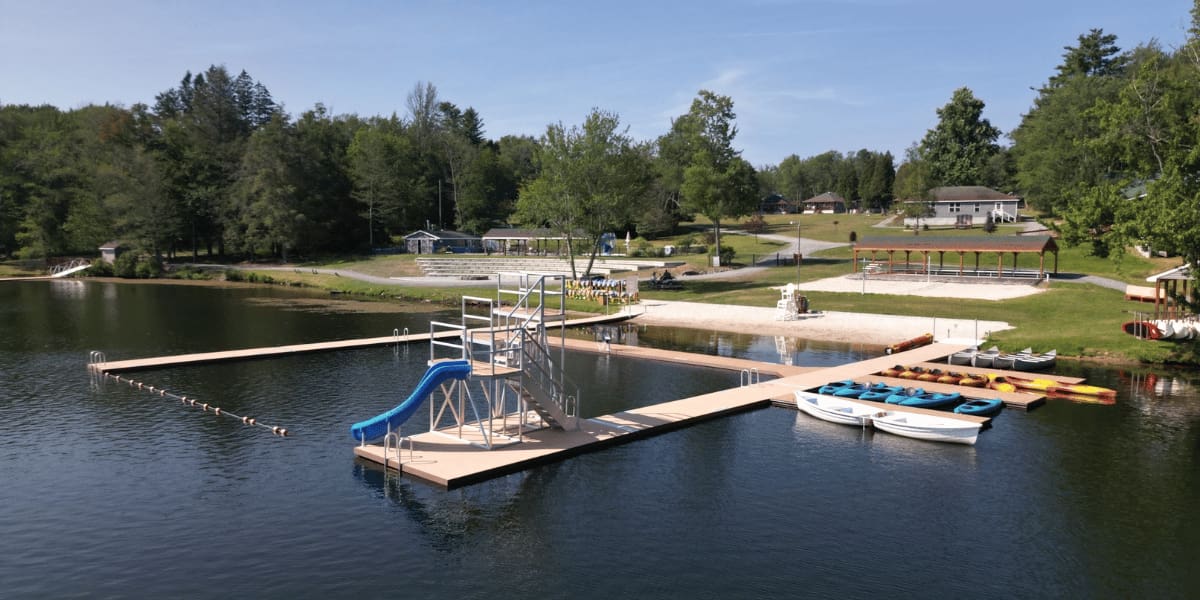
- A U-shaped swim area with a lifeguard platform
- A straight dock off to the side with two launch lanes for kayaks/canoes
- A T-shaped fishing zone at the far end (away from the swim area)
- A separate work dock closer to shore for staff-only tasks
This kind of separation helps reduce accidents and makes your waterfront feel calm and well-run even on busy days.
Planning tips before you choose a modular layout
These quick questions help you avoid expensive redesigns later:
- How many people will be on the dock at peak times?
- Do you need separate “zones” for safety (swim vs. boats vs. fishing)?
- Will water levels change a lot during the season?
- Do you need a staff-only area for maintenance and storage?
- Do you want to expand next year (or five years from now)?
If the answer is “yes” to growth, modular is usually the safer bet.
ADA Accessible Lake Dock Designs
Accessibility isn’t just a nice extra, especially in public parks and many camp settings, it’s often required. The U.S. Access Board provides guidance tied to the ADA Standards, including details for boating facilities and fishing piers/platforms.
What “ADA accessible” means in real life
In simple terms, an accessible waterfront helps people with disabilities:
- reach the dock safely,
- move around comfortably,
- and participate in activities like fishing, boating, or paddling.
Lake dock features that improve accessibility
Here are the most common design elements that support accessibility:
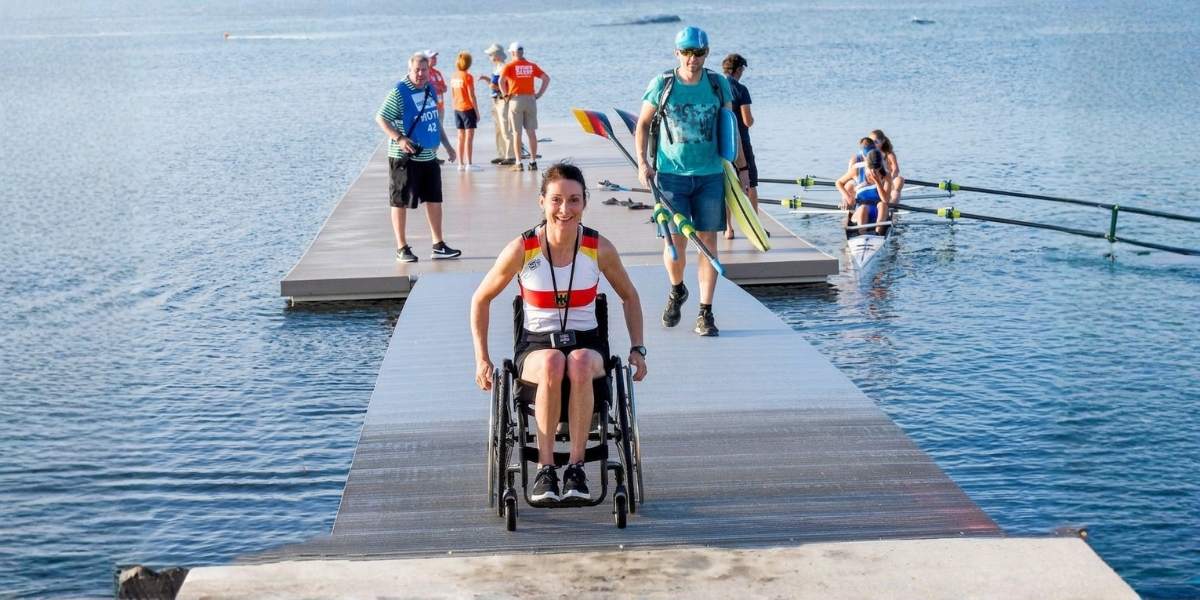
- Wide walking surfaces so wheelchairs and mobility devices can pass comfortably
- Stable, slip-resistant decking to reduce falls (especially when surfaces are wet)
- Gangways designed for changing water levels (floating docks rise and fall, so the access route needs to work across conditions)
- Handrails where needed for support and confidence
- Transfer platforms that help someone move from a wheelchair to a kayak/canoe seat (when you offer adaptive paddling)
- Clear pathways without tight pinch points, sharp turns, or cluttered storage
A key ADA detail: gangway slope and fluctuating water
One of the trickiest parts of accessibility on the water is slope, because water levels change. The Access Board explains that gangways should be designed to provide for a maximum 1:12 slope (8.33%), and it also discusses exceptions and how gangway length interacts with slope requirements for ramps serving floating piers and fishing platforms.
Key takeaway:
You can’t control the lake level, but you can design the dock access so it’s as gentle and usable as possible most of the time.
Why floating docks can help with accessibility
Floating docks stay closer to the water surface as levels rise and fall, which can make:
- launching small boats easier,
- transfers more predictable,
- and access more consistent across the season.
If your park serves a diverse community (and most parks do), accessible dock design isn’t optional: it’s part of building a waterfront that truly works for everyone.
Lake Dock Ideas for Kayak and Canoe Programs
Camps and parks love paddling programs because they’re fun, teach skills, and work for a wide range of ages. But if the launch area is muddy, steep, or crowded, the whole program becomes harder to manage.
Here are some lake dock ideas that make kayak and canoe programs smoother and safer:
1. Lower dock height for easier entry
A dock closer to the water enhances stability for all ages and skill levels, making it effortless for kids and older visitors to get in and out safely.
2. Launch rails for stability
Simple handholds and rails can prevent:
- sideways tipping,
- awkward “jumping in,”
- and panic moments for new paddlers.
3. Designated launch lanes
This is a big one for camps. If you’re running multiple boats back-to-back, lanes keep things moving:
- one lane for launching,
- one lane for returning.
4. Separate storage dock or staging area
A staging area keeps paddles, PFDs, and boats from piling up in the walking path.
5. Non-slip surfaces
Wet feet, wet gear, wet decks: non-slip is not negotiable in high-traffic waterfronts.
Key takeaway:
A well-planned lake dock for paddling should feel simple and predictable. Clear where to line up, clear where to launch, and clear where to return. When people aren’t guessing what to do next, you get fewer falls, fewer collisions, and a calmer waterfront.
Swim Areas and Lifeguard Platforms on a Lake Dock
Swimming is often the “main event” at camp, and it’s a major draw at many parks too. The best swim areas don’t just happen: they’re designed.
Common swim dock layouts
- U-shaped swim areas to create a defined boundary
- Central lifeguard platforms for visibility and supervision
- Separate shallow and deep water zones to match swimmer ability
- Clearly marked entry and exit points so kids aren’t climbing out anywhere they want
The American Camp Association (ACA) regularly stresses the importance of inspection, safety preparation, and strong supervision at waterfronts.
Why a lifeguard platform is worth it
A lifeguard platform can:
- improve visibility,
- reduce blind spots,
- and help staff enforce rules without yelling across the water.
When the layout supports supervision, your team can focus on safety, not chaos control.
Fishing Docks and Observation Platforms
Fishing docks are one of the most-used park features because they’re multi-purpose:
- fishing,
- nature watching,
- photography,
- and community events.
What makes a fishing lake dock work well
- Wide walkway (better for mobility access and group use)
- Built-in seating so people can stay longer comfortably
- Rod holders (small touch, big difference)
- Partial railing sections for safety, without blocking casting areas
- Shade structures in hot climates (optional but popular)
- Slip-resistant decking for wet mornings and rainy days
Floating fishing docks are also helpful because they adjust as water levels change, which keeps access more consistent through the season.
Separate Work and Maintenance Lake Dock Areas
Not all lake dock ideas are about recreation. Staff need functional space too.
A camp or parks department may need a dock area for:
- equipment storage,
- boat maintenance,
- water testing,
- trash/debris removal,
- utility access.
Why a dedicated work dock matters
If maintenance happens in the same space guests are using, you get:
- tripping hazards,
- blocked walkways,
- more risk,
- and more frustration.
A separate work platform keeps your waterfront cleaner, safer, and more professional.
Choosing Durable Materials for Public Use
Camps and parks are hard on docks. High traffic + sun + weather + wet gear = wear and tear.
Traditional wood docks (pros and cons)
Pros
- Lower upfront cost (sometimes)
- Familiar look
Cons
- More maintenance over time
- Can splinter, rot, or warp
- Often needs sealing/staining
- Repairs can get frequent and expensive
Commercial-grade floating systems (pros and cons)
Pros
- Resistant to rot and insects
- Often UV-stabilized materials
- Lower ongoing maintenance
- Long lifespan
- Designed for heavy use
Cons
- Higher upfront investment (often)
- Requires thoughtful design (anchors, gangways, layout)
Shoreline protection and responsible planning
The U.S. EPA highlights approaches like living shorelines to reduce erosion and protect natural shoreline processes. While docks are only one part of the picture, choosing designs that limit shoreline disruption and support stable access can fit into broader shoreline protection goals.
Big-picture takeaway:
When you look at total lifetime cost (not just purchase price), durable systems often win, especially in public-use environments.
Multi-Use Lake Dock Designs for Busy Facilities
The best lake dock ideas let you do more with one waterfront.
A typical schedule might look like:
- Morning: swim lessons
- Afternoon: kayaking
- Evening: fishing
- Weekend: community event
A modular dock system makes it easier to support all of that because you can:
- expand over time,
- rearrange zones,
- and even remove or store sections seasonally (depending on your climate and operations).
Flexibility is the secret to long-term success, especially when your programming changes year to year.
Questions to Ask Before Installing a Lake Dock
Before you choose a dock layout or get pricing, it helps to slow down and ask the right planning questions. Camps and parks have more people, more activities, and more safety responsibility than a typical backyard setup, so you want a plan that works now and later.
Below are the most important questions to ask before installing a lake dock, along with simple explanations of why each one matters. (These are also great questions to bring to a dock manufacturer or installer during the consideration stage.)
1. How many people will use the dock at one time?
This is your “peak load” question, and it matters more than people think.
Ask yourself:
- Is this dock used by a small group at a time, or do crowds gather here?
- Do you have camp check-in lines, group swim time, or community events?
- Will parents, kids, staff, and visitors all be on the dock at once?
Why it matters:
- Higher foot traffic usually means you need wider walkways, larger platforms, and stronger, commercial-grade components.
- Overcrowding can cause slips, falls, and dock damage over time.
Helpful tip: Think about your busiest day of the year, not your average day.
2. What activities will the dock support?
A dock isn’t just a dock at a camp or park. It’s usually the “hub” for multiple programs. The more specific you are here, the better your layout will be.
Common camp and park activities include:
- Swimming and lifeguard supervision
- Kayaking and canoeing
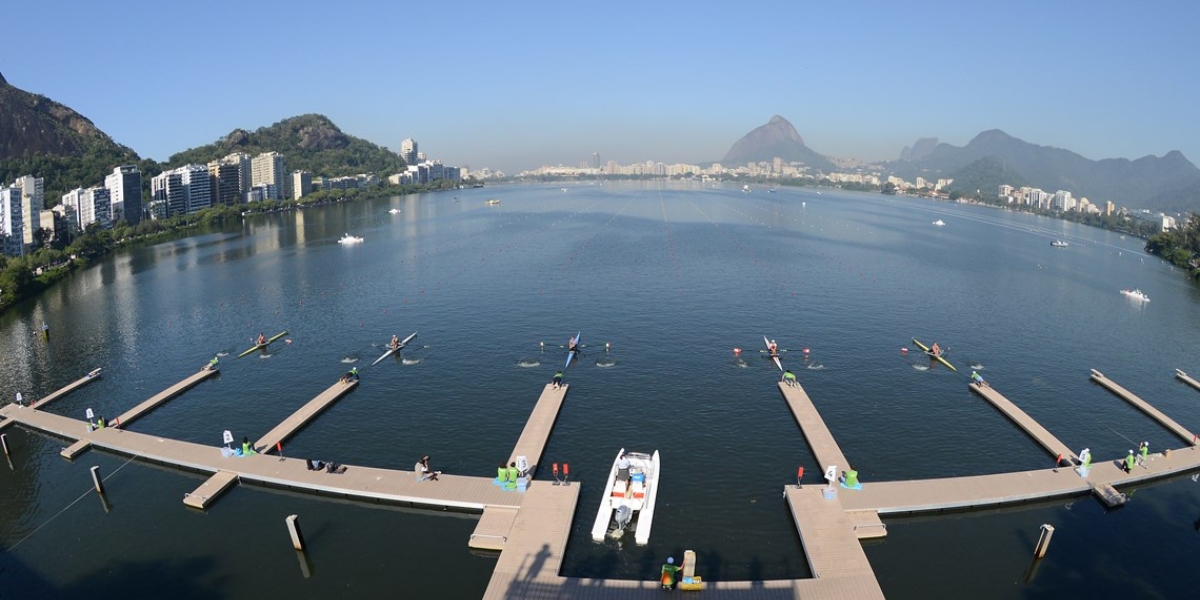
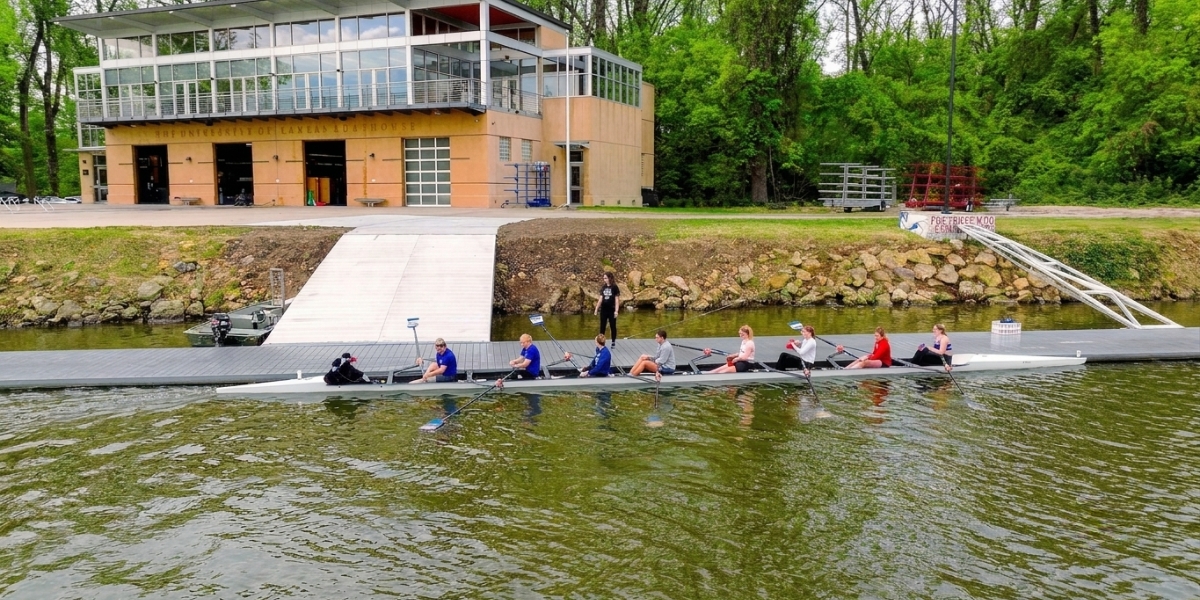
- Rowing or paddle sports programs
- Fishing access
- Wildlife viewing / education programs
- Boat tie-up and loading
- Maintenance and water testing
Why it matters:
- A swim area often needs open space, clear entry/exit points, and lifeguard visibility.
- A kayak launch works best with lower dock height and stable launch points.
- Fishing access usually needs wider areas, seating space, and often rails in certain spots.
- Maintenance needs a separate space so staff aren’t working around guests.
If you want flexible lake dock ideas, consider designing “zones” so each activity has its own place.
3. How much will water levels change?
Lakes can rise and fall due to seasons, rain, drought, and water management. If your water level changes a lot, that can affect safety and usability, especially for fixed docks.
Ask:
- What’s the normal water level range throughout the year?
- Does the shoreline get muddy or exposed during low water?
- Does the area flood during heavy rain seasons?
Why it matters:
- A floating dock system rises and falls with the lake level, which keeps access more consistent.
- Gangway slope can become an issue when water levels swing a lot, so planning for the “high” and “low” seasons matters.
Practical example: If your lake drops 1–2 feet in late summer, a dock that worked great in spring might suddenly be too high to launch kayaks comfortably.
4. Do we need ADA compliance?
If you manage a public park, government facility, or any site that serves the public, ADA accessibility is often required. Even for camps, accessibility can be a major part of your mission and programming.
Ask:
- Do we need wheelchair access to the dock?
- Do we need accessible fishing access?
- Do we want an accessible kayak/canoe launch option?
Why it matters:
- ADA planning affects dock width, surface type, handrails, and gangway slope.
- Accessibility isn’t just about compliance. It’s about making the waterfront usable for more people.
Planning tip: Don’t treat accessibility as an “add-on.” It’s best (and usually more cost-effective) to design for it from the beginning.
5. What is our long-term maintenance budget?
This question is huge because docks aren’t a one-time purchase. They’re an ongoing asset.
Ask:
- Who will inspect the dock and how often?
- Do we have staff for upkeep, or will we hire it out?
- Do we want low maintenance, even if upfront cost is higher?
Why it matters:
- Traditional wood can require regular sealing, board replacement, and repair.
- Commercial-grade modular floating systems are often designed to reduce long-term maintenance.
Simple way to think about it:
- Lower upfront cost can sometimes mean higher yearly costs
- Higher quality materials often mean less hassle over time
For camps and parks, predictable maintenance is usually a big win, especially when staff changes seasonally.
6. Will we need space for equipment or staff operations?
A lot of organizations forget this until after the dock is installed.
Ask:
- Do staff need space for rescue equipment, paddles, life jackets, or storage bins?
- Will you be tying up boats used for supervision or classes?
- Do you need a work platform for water testing, debris removal, or repairs?
Why it matters:
- Mixing “guest space” and “work space” can create safety issues.
- A separate staff/work platform makes operations smoother and keeps the public area cleaner.
Pro tip: If your waterfront is busy, plan a dock layout that includes a “back of house” area, just like a restaurant does.
Bringing Your Lake Dock Ideas To Life
The right lake dock ideas can completely transform your waterfront. Whether you need a swim platform, fishing pier, kayak launch, or multi-use recreation area, thoughtful design makes all the difference.
A well-built lake dock improves safety, organization, and long-term durability. It supports your programs today while giving you flexibility for the future.
If you’re exploring lake dock ideas for your camp or park, now is the time to consider modular floating dock systems designed for heavy public use. Visit our floating docks page to learn more about our customizable floating dock solutions, or contact us for more information.
AccuDock is a global leader in the design and manufacturing of Floating Docks
CALL 954.785.7557 OR EMAIL [email protected] FOR MORE INFORMATION


