


Best Swim Dock Platforms for Water Resorts, Camps, and Parks
When people visit a lakefront resort, summer camp, or public park, the water is usually the main attraction. And right in the center of the action? The swim dock.
A well-designed swim dock gives guests a safe place to swim, relax, launch kayaks, and jump into the water. It becomes a gathering space, a photo spot, and often the highlight of the entire waterfront. But not all docks are built the same, especially when they’re used in busy commercial environments.
If you’re exploring options for a water resort, camp, or park, this guide will help you understand what to look for and how to choose the right lake swim platform for your property.
Why a Quality Swim Dock Is So Important
A swim dock at a private home usually gets used by a few people at a time. It might see weekend use, maybe some holidays, and that’s about it.
But a swim dock at a water resort, summer camp, or public park is a whole different story.
In commercial settings, your dock isn’t just a “nice extra.” It becomes a high-traffic, high-visibility feature that people rely on every day. That means it has to be built for real-world wear and tear, because if it’s not, you’ll feel it quickly in repairs, complaints, downtime, and safety concerns.
Here’s why quality matters so much.
Commercial Swim Docks Take a Beating (In a Good Way!)
If your dock is successful, it will be busy. And busy docks deal with:
- Heavy foot traffic all day long
- Kids jumping, running, and diving (often all at once)
- Constant water exposure, including waves, spray, and moisture
- Full sun exposure, which can cause fading, warping, and cracking in cheaper materials
- Changing water levels from rainfall, drought, and seasonal drawdowns
- Long-term wear from anchors, ladders, cleats, and daily use
This is why “light-duty” docks that might work at a private home can struggle in public or commercial environments.
The Swim Dock Is Part of the Experience
For resorts and camps, a swim dock is more than a structure: it’s part of what people pay for.
It helps create:
- A fun, safe swim zone
- A place to relax, sunbathe, and socialize
- A launch point for paddleboards, kayaks, and inflatables
- A “hub” area that feels organized and inviting
For public parks and government projects, the focus is often on:
- Safety
- Accessibility
- Durability
- Low maintenance
- Long service life
That’s why many commercial property owners choose modular floating dock systems from companies like AccuDock. Their American-made docks are designed specifically for high-use commercial, government, and public-access environments where reliability matters and downtime is expensive.
What to Look for in a Commercial Swim Dock
If you want a dock that lasts and keeps people safe, there are a few must-have features to look for. Below is a practical breakdown that’s easy to use when comparing options.
1. Stability and Strength
A commercial swim dock needs to feel solid underfoot. It should not feel like a “floating trampoline,” and it shouldn’t bounce or tilt every time someone moves.
Why? Because stability affects:
- Safety (less slipping, fewer falls, fewer accidents)
- Comfort (guests feel confident walking, sitting, and standing)
- Supervision (lifeguards and staff can manage a swim area better)
- Confidence (people trust the facility more when it feels well-built)
What Creates a Stable Swim Dock?
A stable dock is usually built with:
- High-buoyancy flotation (the dock can support people without sitting low in the water)
- Even weight distribution (so one side doesn’t dip when people gather there)
- Minimal rocking (especially important for kids, seniors, and busy swim areas)
- Strong internal framing (so the dock doesn’t flex or twist over time)
High-density polyethylene (HDPE) floats are common in higher-quality dock systems because they resist water damage and provide long-term performance. They also hold up well in harsh environments: sun, water, algae, and frequent use.
If your dock will serve large groups, like a summer camp or public park, stability is non-negotiable. A stable dock is safer, easier to maintain, and far more enjoyable to use.
2. Slip-Resistant Surfaces
Here’s the truth: even the most careful people slip on wet surfaces sometimes. And swim docks are almost always wet.
That’s why slip resistance matters so much.
Why It’s a Big Deal
A wet dock surface can lead to:
- Slips and falls
- Injuries
- Complaints
- Liability issues
In public settings especially, you want to do everything you can to reduce risk.
Best Decking Options for Commercial Swim Docks
Look for materials designed for water use, such as:
- Composite decking (durable and low maintenance)
- PVC decking (highly water-resistant and long-lasting)
- Textured aluminum surfaces (strong, stable, and often very slip-resistant)
These materials hold up much better than traditional wood, especially in sunny, humid environments where wood can splinter, warp, or become slick over time.
Another big plus: quality decking reduces maintenance. You spend less time staining, sealing, and replacing boards, and more time running your facility.
3. Modular Design for Flexibility
One of the biggest advantages of modern floating docks is modular design. In simple terms, modular docks are built in sections that connect together, like building blocks.
And that’s a big deal for commercial properties, because needs change.
Why Modular Matters
Modular dock systems allow you to:
- Expand later if your facility grows
- Change the layout based on guest traffic or programming
- Add ramps or swim ladders where you need them
- Create separate zones (swim zone, launch zone, lounging zone)
- Replace only one section if something gets damaged, without rebuilding the entire dock
So instead of “one dock forever,” you have a system that can adapt.
This flexibility is especially useful for:
- Resorts that want to add features over time
- Camps that rearrange activities seasonally
- Parks that need to meet changing accessibility requirements
Lake Swim Platform Designs for Resorts
For resorts, a lake swim platform isn’t just functional: it’s part of the guest experience and the property’s visual appeal.
In many cases, the swim dock becomes:
- A main attraction
- A “hangout” space
- A photo-friendly feature
- A spot guests talk about in reviews
What Resort Guests Want
Resort guests typically want:
- Plenty of space to lounge
- Easy water access (ladders, steps, or lower freeboard sections)
- A safe place for kids
- A clean, modern look that feels premium
A Strong Resort Layout (That Works for Most Properties)
A large rectangular swim dock works well for many resorts because it’s simple, stable, and spacious.
Common resort add-ons include:
- Stainless steel swim ladders (durable and guest-friendly)
- Perimeter bumpers (protects the dock and improves safety)
- Wide gangways for easy access from shore
- Seating or shaded areas for comfort
In a well-designed layout, the lake swim platform becomes a central hub. Guests may sunbathe on one side while others launch paddleboards or relax at the edge.
Because resorts focus on guest satisfaction, comfort and appearance matter just as much as durability.
Best Swim Dock Platforms for Summer Camps
Summer camps can be tough on equipment, and swim docks are no exception.
A camp swim dock often handles:
- Constant movement
- Swim lessons
- Jumping and diving
- Large groups
- Daily use for weeks at a time
What Camps Should Focus On
Camps should prioritize:
- High load capacity (lots of kids at once)
- Clear swim zones (organized and safer)
- Multiple ladders (better flow, fewer bottlenecks)
- Durable bumpers (protects the dock and swimmers)
- Strong anchoring (critical for safety and stability)
Many camps use modular systems to create organized areas. For example:
- A main platform for gathering
- Smaller connected sections for beginner swimmers
- A separate area for diving or deep-water practice
Floating systems are also helpful in lakes where water levels change throughout the season. The dock rises and falls naturally with the water, keeping access safe and consistent.
Swim Dock Solutions for Public Parks
Public parks have different needs than private resorts. Parks often need solutions that are safe, durable, accessible, and affordable long-term.
Municipal projects often require:
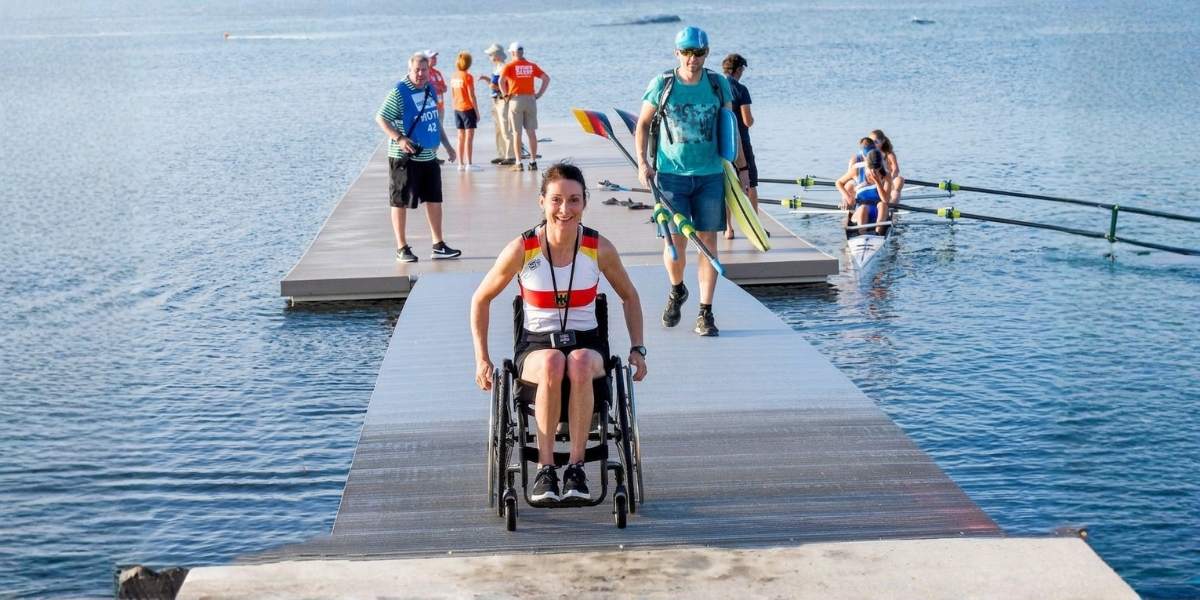
- ADA compliant access
- Low maintenance
- Long lifespan
- Budget-conscious planning
Accessibility Matters: ADA Considerations
Many park departments need ADA compliant docks, which typically means:
- Gentle-slope gangways
- Handrails
- Stable walking surfaces
- Easy transfer points
Floating dock systems can be engineered to meet accessibility needs while still looking clean and modern without feeling bulky or industrial.
Low Maintenance Saves Money
Public parks operate on tight budgets. A well-built swim dock lowers long-term costs by reducing repairs and replacements.
Materials like the below help prevent common issues like corrosion, fading, cracking, splintering, and water absorption.
- Marine-grade aluminum
- HDPE flotation
- UV-resistant decking
Over time, a quality dock system saves money and reduces downtime, because you’re not constantly fixing problems or closing the swim area.
Why Quality Pays Off
A commercial swim dock has a big job. It supports people, creates a safe swim experience, and becomes a major feature for resorts, camps, and parks.
When you choose a quality modular floating system, you’re investing in:
- Safety
- Guest experience
- Durability
- Flexibility
- Lower long-term maintenance
If you want a dock that looks great, performs well, and holds up to heavy use, it’s worth choosing a system designed specifically for commercial environments.
Floating vs. Fixed Swim Docks
If you manage a resort, camp, park, or marina, you’ve probably asked the big question:
“Should we choose a fixed swim dock or a floating swim dock?”
The truth is: both can work well, but the best choice depends on your water depth, water level changes, wave action, budget, and how you plan to use the dock. Below is a clear, friendly breakdown to help you decide.
What’s the Difference Between Fixed and Floating Swim Docks?
Fixed Swim Dock (also called a stationary dock)
A fixed dock is built on pilings (posts) that are driven into the lakebed or seabed. The dock stays at one set height and does not move with water levels.
Floating Swim Dock
A floating dock sits on buoyant floats and rises and falls naturally with the water level. It’s usually attached to shore with a ramp and secured with an anchoring system.
Fixed Swim Docks: Pros and Cons
Pros of Fixed Docks
- Extremely stable
Fixed docks feel very solid. They don’t bounce or shift much when people walk or run on them, which can feel reassuring for high-traffic areas. - Great for shallow, consistent water
If your water depth stays pretty steady year-round and you’re in a shallow area, a fixed dock can be a simple, sturdy solution. - Can handle certain rough-water conditions
In some locations, a properly built fixed dock can perform well because it’s anchored to pilings (though waves and storms can still cause damage).
Cons of Fixed Docks
- They do NOT adjust to changing water levels
This is the biggest downside. If the lake rises or drops, your dock stays in the same place.That can cause problems like:
- The dock sits too high above the water during low levels (hard to climb in/out)
- The dock is too close to the water during high levels (more splash, less comfort)
- The access ramp becomes too steep or unsafe
- Often more expensive to install
Fixed docks usually require heavy equipment and more labor (especially for pilings). Installation can be complicated depending on soil conditions, permitting, and water depth. - Harder to modify later
If you want to expand or change the shape, fixed docks can be tough and expensive to redesign. - Can be more impacted by ice or shifting bottom conditions
In colder climates, ice can push against pilings or the dock structure. In areas with soft bottoms, pilings may require special engineering.
Floating Swim Docks: Pros and Cons
Pros of Floating Swim Docks
- They adjust automatically to changing water levels
This is a huge advantage for lakes and reservoirs where the water rises and falls seasonally.A floating swim dock stays at a consistent “step-to-water” height, which helps with:- Easier swimming access
- Safer ladder use
- Better comfort for kids and seniors
- Consistent ramp angles
- Easier installation in many environments
Floating docks often need less heavy construction than fixed docks. They can sometimes be installed faster (depending on the layout and anchoring plan). - Modular and expandable
Modular floating docks are like building blocks. You can:- Add more sections later
- Create custom shapes
- Add swim platforms, T-docks, or sun decks
- Reconfigure the layout as needs change
This is especially helpful for growing resorts, camps, and parks.
- Often more cost-effective long-term
Because they’re modular and easier to repair section-by-section, floating docks can reduce long-term maintenance and upgrade costs.
Cons of Floating Docks
- They require proper anchoring
Floating docks are only as good as their anchoring system. If anchoring is poorly designed, the dock may drift, twist, or shift during storms. - Slight movement can happen in rough water
Floating docks can move a bit with waves, especially if the site is exposed and doesn’t have natural protection. That said, heavy-duty systems and proper anchoring can reduce movement significantly. - They may need seasonal adjustments
Some properties adjust anchoring lines, chain lengths, or tension seasonally depending on water level changes and storm season.
So: Which Is Better for Lakes and Reservoirs?
For most lakes and reservoirs, floating docks are usually the better choice,
because water levels naturally rise and fall during the year.
A floating swim dock:
- stays usable during high and low water
- keeps ladder height consistent
- reduces steep ramp angles
- can be expanded or reconfigured over time
That’s why floating systems are so common at:
- water resorts
- summer camps
- public parks
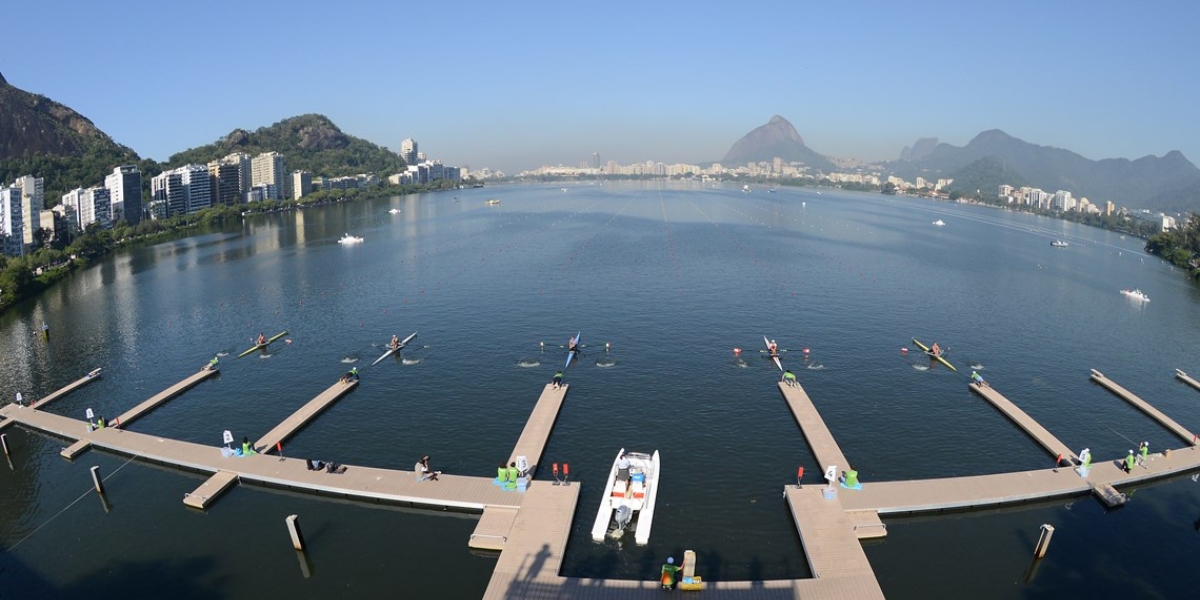
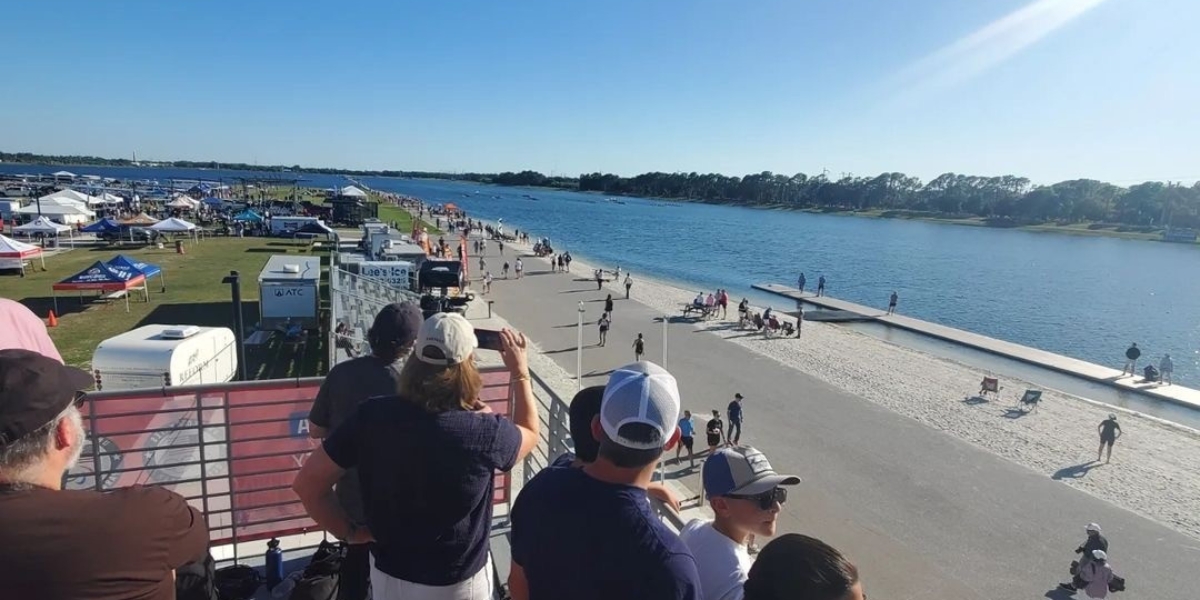
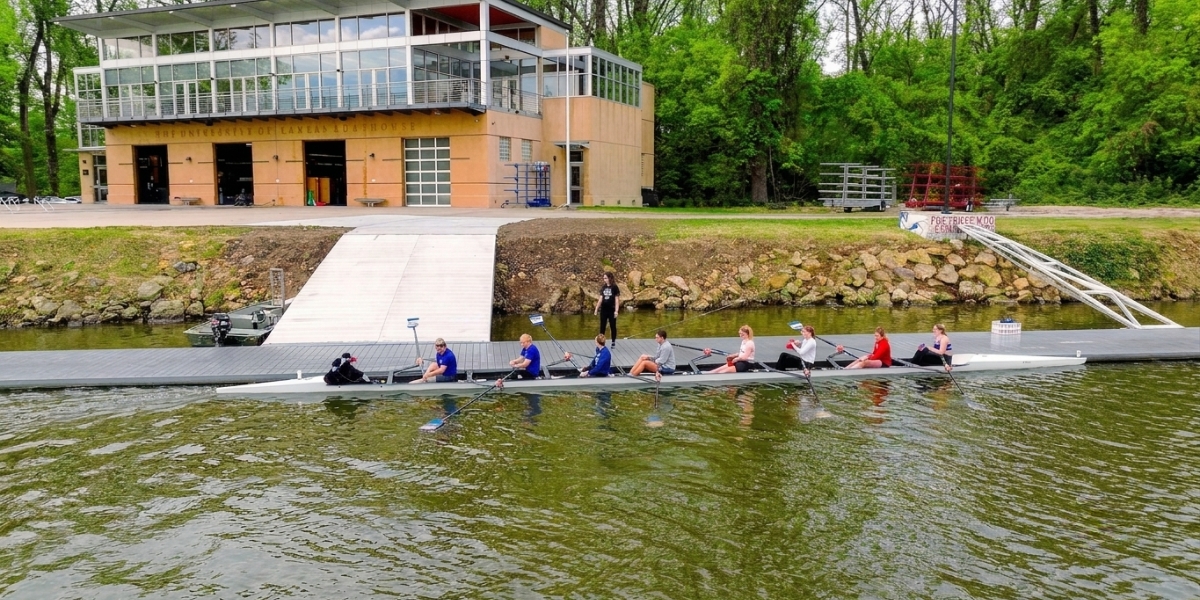
- rowing/kayak venues
- lakefront marinas
If you’re building a swim dock for a lake, reservoir, camp, resort, or park, floating systems are usually the most practical choice, especially when water levels rise and fall. But the real “secret” to long-term success is anchoring. A properly anchored floating dock can be stable, safe, and reliable for years.
If you want the best results, work with a professional dock manufacturer who can evaluate your site conditions and recommend the safest dock layout and anchoring plan for your needs.
Custom Features That Improve the Experience
Today’s swim dock systems can be customized to fit your brand and property layout.
Popular upgrades include:
- Custom color decking
- Built-in lighting
- Safety rails
- Shade structures
- Branded inlays
Companies like AccuDock specialize in modular floating dock systems that can be customized for resorts, camps, and government projects across the country.
Customization not only improves function: it also enhances the overall guest experience.
Durability and Long-Term Value
Commercial waterfront properties need infrastructure that lasts.
A high-quality swim dock built with marine-grade materials will:
- Resist sun damage
- Withstand heavy use
- Minimize repairs
- Provide years of reliable service
While cheaper docks may save money upfront, they often cost more over time in repairs and replacements.
For busy resorts, camps, and parks, reliability is everything.
How to Choose the Right Swim Dock for Your Property
Ask yourself:
- How many people will use it at once?
- Will water levels change seasonally?
- Do you need ADA access?
- Is expansion likely in the future?
- What kind of maintenance budget do you have?
Answering these questions will help narrow down the right solution.
Choosing the Best Swim Dock Platforms
A well-designed swim dock can completely transform your waterfront. It creates a safe, inviting place for guests, campers, and families to enjoy the water.
Whether you’re installing a swim dock at a luxury resort, building a durable lake swim platform for a summer camp, or upgrading a public park waterfront, choosing the right floating system makes all the difference.
If you’re ready to explore high-quality, modular floating dock solutions built for commercial environments, contact us to learn more about the best swim dock systems for your project.
AccuDock is a global leader in the design and manufacturing of Floating Docks
CALL 954.785.7557 OR EMAIL [email protected] FOR MORE INFORMATION


